

Thirty-plus firearms. A tactical crossbow. A clear, 120-minute operational warning. An absolute, devastating institutional paralysis.
- The First Line of Defense: The Armed Resistance of Amin Abdullah
- Unmasking the Arsenal: A Systemic Blind Spot
- The 120-Minute Window: Institutional Paralysis
- The Digital Assembly Line of Hate and the Livestream Atrocity
- The Legal Hypocrisy and The Muslim Right to Life
- Criterion Post: Demanding Systemic Accountability
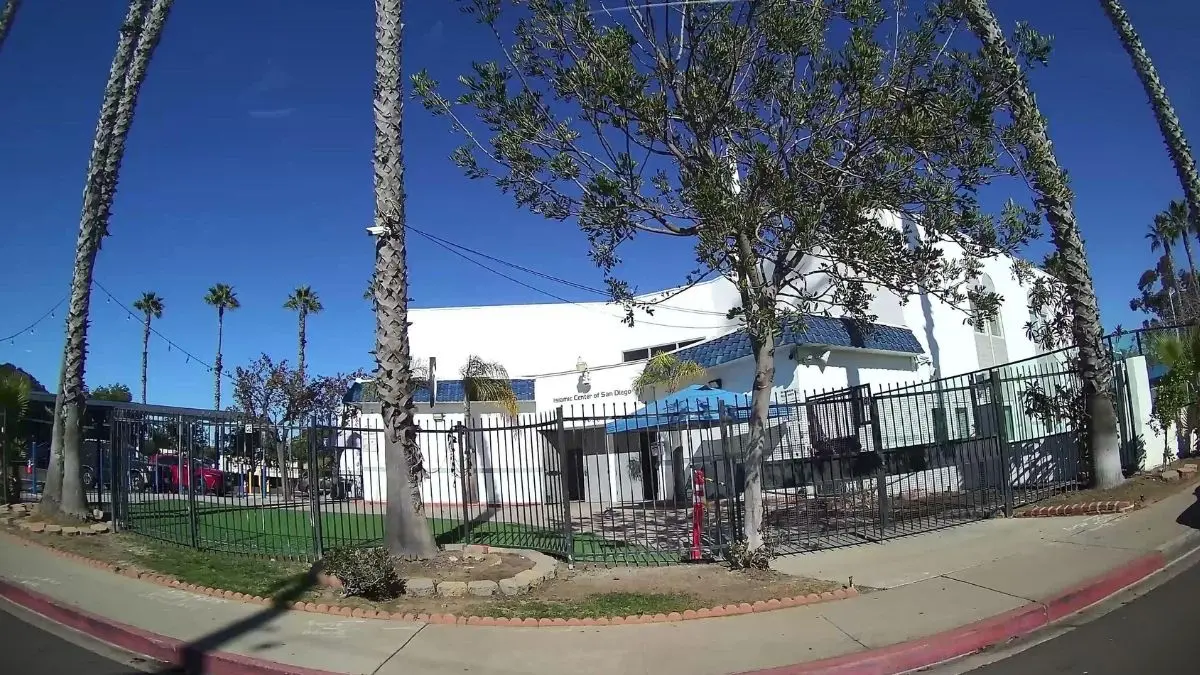
On May 18, 2026, the fragile illusion of absolute security in the Western world did not merely fracture; it was deliberately dismantled. In broad daylight, at approximately 11:43 AM, the Islamic Center of San Diego (ICSD) became ground zero for a heavily armed, meticulously planned assault. The primary target was unequivocal: Muslims exercising their fundamental, constitutionally protected right to worship.
This was not a spontaneous incident, a random act of suburban violence, or a sudden “mental health crisis.” It was a calculated, ideologically driven strike executed by seventeen-year-old Cain Lee Clark and eighteen-year-old Caleb Liam Vazquez. They arrived at the region’s largest mosque just before the noon prayer, fully aware that the adjacent school building housed dozens of children. In the ensuing violence, three innocent Muslims were martyred: Mansour Kaziha, Nader Awad, and a man whose name will forever be etched in the annals of extraordinary bravery, Amin Abdullah.
As the San Diego Police Department (SDPD) and federal agencies establish their perimeters and gather forensic evidence, the mainstream media has already deployed its predictable defense mechanisms. Pundits rush to speak of “lone wolves” and individual psychological anomalies. At Criterion Post, we vehemently reject these manufactured narratives. We look at the empirical data, the dispatch timelines, the livestreamed digital footprints, and the systemic blind spots that allow such concentrated hatred to form, organize, and materialize into lethal action.
The First Line of Defense: The Armed Resistance of Amin Abdullah
To understand the full magnitude of what occurred—and the unprecedented historical catastrophe that was prevented—we must first recognize the human element that stood against steel, lead, and unadulterated hatred.
As the heavily armed attackers breached the perimeter, Amin Abdullah, an armed security guard and a devoted father of eight, did not hesitate. He did not seek shelter, nor did he wait in vain for a delayed police response. Instead of retreating, Abdullah drew his weapon and engaged the heavily armored assailants in a direct, intense firefight. He built a wall of pure courage and ballistic resistance between the attackers and the congregation.
Recognizing the imminent threat to the adjacent school and the main prayer hall, Abdullah actively intercepted the assailants. He exchanged fire with the terrorists, utilizing his tactical training to pin them down, disrupt their momentum, and buy the critical seconds necessary to initiate a facility-wide lockdown. The presence of an armed, unyielding Muslim defender completely shattered the cowardly fantasies of the attackers.
Abdullah did not survive the encounter. He fell at the gates, a martyr defending the innocent. However, his decisive armed resistance and ultimate sacrifice forced Clark and Vazquez to lose their element of surprise, their spatial advantage, and their nerve. Facing locked doors, incoming return fire, and realizing their operational timeline was entirely broken, the attackers panicked and ultimately fled the scene. They were later found dead in their vehicle from self-inflicted gunshot wounds, having broadcast their cowardice via a livestream.
Abdullah’s actions are a profound testament to the unbreakable resilience of the Muslim community. While the state security apparatus failed to synthesize a protective environment, a single father’s armed sacrifice ensured that dozens of children returned home safely to their parents. Yet, relying on the extraordinary martyrdom of community members to repel heavily armed assaults is not a sustainable domestic security policy. It is a glaring indictment of the state’s structural inability—or absolute unwillingness—to protect its Muslim citizens.
Unmasking the Arsenal: A Systemic Blind Spot
If we are to adhere to the core principles of objective intelligence analysis and factual journalism, we must ask the questions that mainstream outlets actively avoid. Leaked field reports and preliminary federal trace data confirm a detail that should shatter any remaining faith in the domestic security apparatus: Investigators recovered more than thirty firearms, a crossbow (arbalest), and extensive tactical gear linked to the residences of these two teenagers.
Let us process that empirical fact. More than thirty firearms and military-grade combat equipment.
How do a seventeen-year-old and an eighteen-year-old construct an armory of this scale without triggering a single institutional alarm? The narrative of the “isolated, troubled youth” completely collapses under the massive logistical weight of this arsenal. Procuring, storing, and organizing over thirty weapons requires significant time, capital, and a network of complicity—whether intentional or born of severe bureaucratic negligence.
If a young Muslim man in any Western capital had acquired even a fraction of this weaponry, the counter-terrorism apparatus would have initiated a massive, multi-agency crackdown long before the first bullet was loaded. Entire communities would be placed under invasive surveillance. This blatant double standard in threat assessment is not an operational glitch; it is a systemic feature. Law enforcement agencies channel vast resources into monitoring Muslim communities, mapping out daily routines, student associations, and charitable activities. Yet, when heavily armed anti-Muslim extremists develop their arsenals in plain sight, the system suddenly and conveniently goes completely blind.
The 120-Minute Window: Institutional Paralysis
The systemic failure becomes even more egregious, crossing the line from negligence into active institutional paralysis, when we examine the exact timeline provided by the SDPD dispatch logs. The authorities did not just fail to prevent the accumulation of weapons; they failed to act on a direct, urgent, and highly specific warning.
At approximately 9:40 AM—exactly two hours before the attack commenced—the mother of one of the perpetrators contacted 911. She explicitly reported that her son was missing, highly volatile, and a severe suicide risk, noting that his vehicle and a massive cache of weapons were gone. Law enforcement possessed a clear 120-minute window to intercept the vehicle, lock down potential targets, and neutralize the threat.
They did not.
This operational paralysis raises severe legal and ethical questions. When the fundamental right to life of Muslims is on the line, why does the rapid-response capability of the state falter so drastically? This is not mere incompetence; it is the direct byproduct of an institutional culture that does not prioritize the safety of Islamic institutions with the same urgency it applies to other demographics. The blood of Amin Abdullah, Mansour Kaziha, and Nader Awad is not only on the hands of the shooters but also on the bureaucratic mechanisms that stood idle for two hours while heavily armed, radicalized youths drove toward a crowded mosque.
The Digital Assembly Line of Hate and the Livestream Atrocity
We must also completely dismantle the myth that Clark and Vazquez formulated their ideology in a vacuum. Digital forensics have confirmed that the attackers were deeply embedded in decentralized imageboards and encrypted channels explicitly dedicated to white supremacy, neo-Nazism, and virulent Islamophobia. They did not just consume hatred; they sought to broadcast it, livestreaming the assault in a desperate bid for digital infamy among their radicalized peers.
These online platforms are not merely passive forums for free speech; they are highly organized psychological operations. They actively form, nurture, and weaponize hatred. They synthesize historical grievances, xenophobia, and racial superiority complexes into actionable violence. They provide the ideological blueprint that systematically turns suburban teenagers into domestic terrorists.
The jurisdictions that harbor these servers often defend them under the guise of free expression and safe harbor laws. Yet, they serve as the very infrastructure of modern terrorism. The perpetrators in San Diego were radicalized on a digital assembly line—a conveyer belt of hate that Western legal systems persistently refuse to shut down. By allowing these echo chambers to operate without severe legal consequences, governments are essentially subsidizing the radicalization of their own youth against Muslim populations.
The Legal Hypocrisy and The Muslim Right to Life
At the heart of the San Diego tragedy lies a profound legal and moral hypocrisy. Western states frequently lecture the global community on human rights, demanding absolute adherence to international law and democratic norms. Within their borders, they demand complete integration and unwavering loyalty from their Muslim citizens.
However, the social contract is fundamentally broken. Integration requires reciprocal protection. When Muslims gather in their centers, they are exercising a basic human right recognized by the First Amendment and codified in international treaties such as the International Covenant on Civil and Political Rights (ICCPR). Yet, they are forced to hire private armed security, build higher fences, and live in a state of perpetual, exhausting vigilance.
The law is applied selectively. The burden of proof for innocence and the demand to constantly condemn violence is perpetually placed on the Muslim community, while the benefit of the doubt—the “lone wolf” excuse, the “mental illness” plea—is readily granted to those who massacre them. This is not justice; it is a carefully maintained, two-tiered legal system designed to keep one demographic perpetually on the defensive.
Criterion Post: Demanding Systemic Accountability
The attack on the Islamic Center of San Diego is a stark, undeniable reminder that the current domestic security paradigms are failing the Muslim community by design, not by accident. Condolences and momentary outrage from political leaders are entirely insufficient. “Thoughts and prayers” from officials who oversee the very intelligence agencies that failed to detect a 30-gun arsenal and ignored a two-hour warning are an insult to the intelligence of our readers and a profound disrespect to the martyrs.
What is required is a complete, unyielding overhaul of how domestic extremism is classified, monitored, and targeted. The digital networks that synthesize this hatred must be dismantled. The algorithms that feed this radicalization must be regulated. And the institutions that allowed the 120-minute window to close without action must face strict, undeniable legal accountability.