

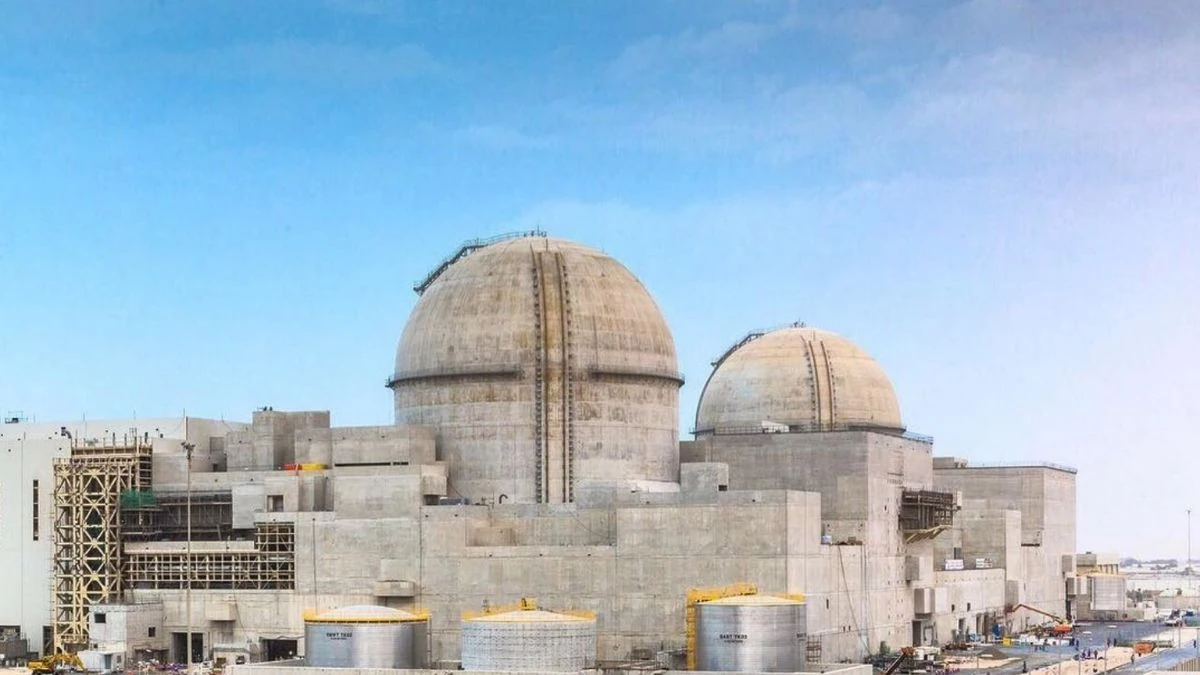
The intersection of asymmetric drone warfare and critical energy infrastructure has reached a highly volatile new threshold in the Middle East. A targeted drone strike recently ignited a fire at an electrical generator on the outer perimeter of the United Arab Emirates’ Barakah Nuclear Power Plant. While the UAE Defense Ministry successfully intercepted two additional drones whose trajectories entered from the western border, and off-site power for Unit 3 was rapidly restored without any radiation leak, the operational messaging is unmistakable. Unidentified hostile proxy actors now possess both the technical capability and the strategic intent to hold the Arabian Peninsula’s most sensitive infrastructure at severe risk.
The Strategic Weight of the Target
To understand the gravity of this breach, one must look at the structural importance of the Barakah facility. Constructed at a cost of $20 billion with the technological assistance of South Korea and brought online in 2020, the four-reactor facility is the absolute cornerstone of the UAE’s post-carbon economic strategy. It is designed to provide up to 25% of the nation’s total electricity requirements.
Furthermore, the operational framework of this facility is governed by a strict “123 agreement” with the United States, which legally halted any domestic uranium enrichment to mitigate global proliferation fears. By targeting a heavily regulated, internationally monitored civilian nuclear site, the perpetrators are intentionally testing the limits of international humanitarian law and global deterrence structures. The incident prompted an immediate response from the International Atomic Energy Agency, with Director-General Rafael Grossi stating the IAEA was closely monitoring the situation.
The Geopolitical Calculus and Retaliation
This strike does not exist in a vacuum; it is a direct mechanical response to shifting military alignments in the region. The UAE had recently integrated foreign air defense systems, including highly controversial deployments from Israel—a maneuver that drastically shifted regional tensions and drew immense ire.
The psychological and strategic impact of threatening a radiological event effectively functions as a massive, asymmetric deterrent against further regional cooperation with United States or Israeli military operations. It is a calculated signal that geographic wealth and conventional military pacts cannot insulate national territories from devastating ecological or economic disruption.
The immediate structural impacts of this event are profound:
- A New Warfare Precedent: Targeting the Arab world’s sole commercial nuclear power plant normalizes the weaponization of potential civilian ecological disasters, establishing a dangerous new standard for regional coercion.
- Defensive Obsolescence: The physical vulnerability of the plant exposes the reality that conventional point-defense systems surrounding global energy hubs require a complete, immediate overhaul.
- Asymmetric Leverage: The proliferation of cheap, precision-guided drones proves that non-state actors can continuously synthesize massive geopolitical leverage, permanently altering the defensive requirements for national infrastructure.
The global community is now forced to recognize a new paradigm: advanced, multi-billion-dollar energy infrastructure remains fundamentally vulnerable to low-cost, asymmetric weapons. The deterrence mechanisms of the 20th century are failing to protect the critical nodes of the 21st century, leaving global markets to question which national infrastructure will be targeted next.