

On May 19, 2026, the Meta-owned social media accounts—specifically Instagram and Facebook—belonging to Norwegian journalist Helle Lyng were abruptly suspended without the platform providing an official, specific reason for the action. The automated suspension notice simply informed her that she had 180 days to appeal the decision before facing permanent deactivation.
This rapid digital de-platforming unfolded shortly after a video of Lyng went viral, capturing her aggressive attempt to question Indian Prime Minister Narendra Modi during a joint media briefing in Norway. As the Prime Minister exited the venue, Lyng was recorded shouting, “Why don’t you take some questions from the freest press in the world?”.
In the immediate aftermath of the viral incident, Lyng faced an organized online backlash from Indian users, engaged in a diplomatic face-off with an Indian embassy official named Sibi George, and subsequently reached out to Indian opposition leader Rahul Gandhi to request an interview. Lyng publicly questioned whether her sudden suspension was the direct result of a coordinated mass-reporting campaign that deliberately misused two-step verification protocols. She ultimately framed the loss of her digital footprint as a “small prize to pay for press freedom”.
Behind the Code: Transnational Repression and Weaponized Algorithms
The core issue extending from this incident is not merely a breach of diplomatic briefing protocols or a transient viral confrontation; it is the fundamental vulnerability of global communication infrastructures. Meta’s complete silence regarding the exact Terms of Service violation leaves a deliberate informational void, one that is rapidly filled by competing political narratives and exposes the opaque mechanics of automated reporting tools.
According to independent digital rights monitors and as amplified by the European press, this incident signals an alarming case of transnational digital repression and a direct, chilling attack on platform accountability and press freedom. It demonstrates how easily structural fail-safes can be overwhelmed by targeted volume.
The fractured media framing of this suspension explicitly illustrates the geopolitical fault lines of modern digital censorship. Indian domestic media largely framed the event around the “viral” nature of the confrontation, portraying it as a diplomatic row and implicitly linking the severe online backlash to her confrontational, “activist” style. Conversely, independent and European outlets highlight the ease with which technology giants’ algorithms can be manipulated by external forces.
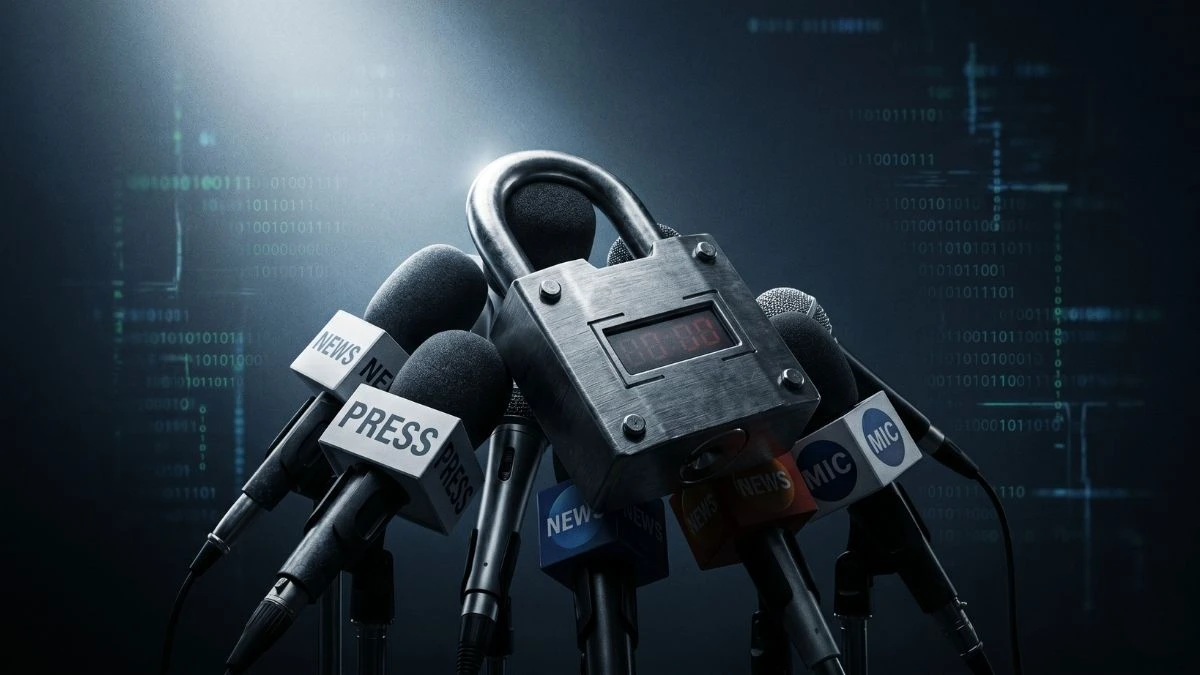
When automated moderation systems can be hijacked by a coordinated digital campaign to silence a journalist across borders, the platform ceases to function as a neutral public square. It is transformed into an active, programmable instrument of suppression. The silence from Meta does not just avoid a public relations crisis; it silently endorses a system where digital sovereignty is outsourced to whoever can deploy the largest swarm of automated complaints.