

TEHRAN — Beneath the smoke of the February 2026 military exchanges, Western intelligence networks initiated one of the most audacious and disastrous covert operations in modern Middle Eastern history. Designated “Operation Epic Fury,” this U.S.-Israeli blueprint was not a standard tactical strike; it was a highly classified attempt to decapitate Iran’s executive leadership and manually install former President Mahmoud Ahmadinejad as a transitional ruler. Within hours, the multi-billion-dollar intelligence maneuver completely collapsed on the streets of the Iranian capital, exposing a catastrophic misreading of Tehran’s true power centers.
Operational details, corroborated by the New York Times’ reporting on the operation’s ambitious regime-change objectives, confirm that the Israeli Mossad initiated the maneuver with a physical “jailbreak” strike on Ahmadinejad’s Tehran residence. The tactical objective was to extract him from the de facto confinement enforced by the IRGC. The extraction failed. Ahmadinejad was wounded during the attempt, causing the broader political apparatus engineered to support his sudden elevation to instantly evaporate. Following a brief informational blackout, he resurfaced—not as a newly installed leader, but to deliver a formal congratulatory message pledging his alignment with the new supreme leader, Mojtaba Khamenei.
The Illusion of Control: Media Framing vs. Ground Reality
While White House officials publicly confirmed the broader kinetic objectives of the operation—including the dismantling of production facilities—the divergence between what was planned in Western situation rooms and what actually unfolded requires a rigorous, rational analysis.
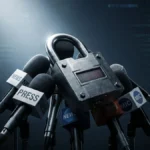
To understand the magnitude of this geopolitical failure, one must examine how it is aggressively sanitized by mainstream media ecosystems. The New York Times and broader U.S. media have heavily relied on official background briefings to frame the event as a bold regime-change strategy, attempting to rationalize the move by drawing flawed parallels to South American political transitions. Conversely, Israeli media, including the Jerusalem Post, focuses almost exclusively on the mechanical failures of the physical jailbreak. This narrow focus serves a specific purpose: it shields the foundational logic of the operation from scrutiny by treating the incident as a mere operational misstep rather than a systemic intellectual failure.
“It would be preferable if someone from within assumed power”
U.S. President Donald Trump
remarked following the initial strikes, explicitly revealing the executive intent behind the targeted internal disruption.
| Source Ecosystem | Primary Narrative Focus | The Downplayed Structural Reality |
|---|---|---|
| U.S. Mainstream Media (NYT) | Highlights ambitious regime change objectives and attempts to draw parallels to Venezuelan political models. | Ignores Ahmadinejad’s historical hardline rhetoric and his absolute domestic isolation. |
| Israeli Press (JPost) | Fixates entirely on the tactical Mossad operations and the physical mechanics of the extraction attempt. | Omits the overarching geopolitical arrogance and the failure to understand Iranian internal power structures. |
| Regional / Eurasian Analysts | Exposes the catastrophic misreading of IRGC dynamics and the total unfeasibility of the transitional figure. | Focuses on the stark reality of the intelligence failure regarding internal factional support. |
A Flawed Blueprint: The Misreading of the IRGC
The foundational error of Operation Epic Fury was not born from a delayed extraction timeline; it was born from a profound blindness regarding the internal political architecture of Iran.
To assume that Mahmoud Ahmadinejad could serve as a viable anchor in a post-war landscape requires a complete disregard for the shifting sands of the nation’s power structures. While he possessed a formidable populist base during his presidency from 2005 to 2013, the geopolitical landscape has radically transformed. His later years produced severe, unbridgeable ruptures with both the IRGC and the traditional clerical establishment.
The architects of this operation attempted to build a new regime upon a foundation that had already crumbled. The IRGC is not merely a military force; it is a deeply entrenched socio-economic network that holds the structural integrity of the state together. To believe that this deeply rooted apparatus could be bypassed by elevating an alienated figurehead demonstrates a staggering disconnect from reality. As Iranian diaspora media has astutely pointed out, there is a profound irony in Western intelligence agencies attempting to utilize a figure historically known for his fiery anti-Western rhetoric.
The Hubris of Political Engineering
The collapse of Operation Epic Fury stands as a stark testament to the limits of external political engineering. It is the hallmark of a structural miscalculation: treating a deeply complex sovereign nation as a blank slate where a designated piece can simply be dropped onto the chessboard to govern a vacuum of power.
Western intelligence apparatuses frequently construct their strategies based on who they expect regional actors to be, rather than analyzing the unforgiving realities of local factions. They synthesize narratives that sound compelling in committee hearings but instantly disintegrate when exposed to the friction of actual regional dynamics.
Operation Epic Fury did not bring about a new era of Western-aligned stability in Iran. Instead, it unified fractured internal factions against a common external threat, solidified the transition of power to Mojtaba Khamenei, and exposed the profound analytical vulnerabilities of the very intelligence agencies that claim to master the globe. The chessboard remains, but the players who fail to understand the board are destined to lose their pieces.