

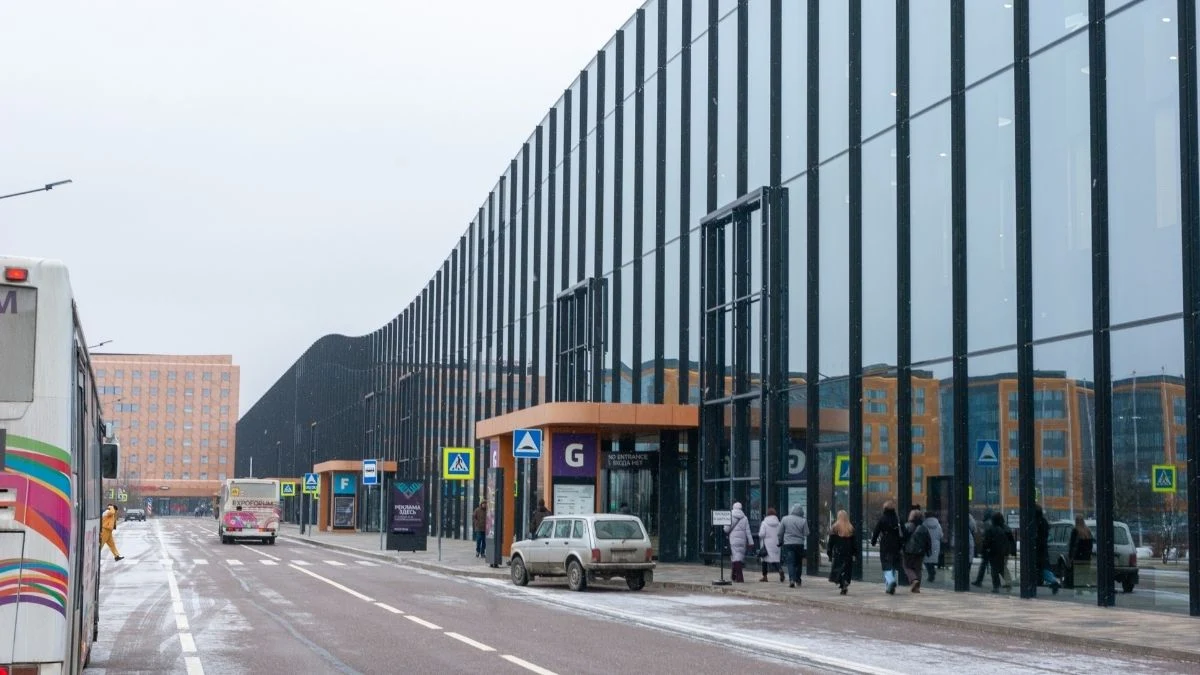
The 29th St. Petersburg International Economic Forum opened June 3 beneath visible black smoke: Ukrainian drone strikes had hit a naval base and an oil terminal near the city before delegates had finished registering. Over four days, 1,084 agreements worth $89.5 billion were signed, delegations from 142 countries attended, and Moscow presented the forum as evidence of a strategic turn from sanctions survival to long-term growth. At the same sessions, officials confirmed that the government had downgraded Russia’s 2026 GDP growth forecast from 1.3 percent to 0.4 percent — near-stagnation, in the year Moscow is calling a turning point.
Saudi Arabia’s Hundred-Year Framing
Russia and Saudi Arabia marked 100 years of diplomatic relations at SPIEF 2026. Saudi Energy Minister Prince Abdulaziz bin Salman led a delegation of more than 200 officials — including the senior leadership of Saudi Aramco — and signed 30 cooperation agreements across energy, education, and tourism. Those 30 agreements follow 90 additional deals concluded in Riyadh during a Russian delegation visit earlier this year.
The Russian-Saudi Business Council set a $10 billion bilateral trade target at the forum — nearly three times the approximately $4 billion expected for full-year 2025, itself a record. The council’s own chairman named payment system restrictions as the central obstacle: ruble-denominated settlements remain structurally limited, and much of the bilateral trade currently moves through third-country intermediaries. A bilateral relationship that requires third-country routing to settle basic invoices is structurally constrained regardless of how many agreements are signed at a forum.
The American Question at SPIEF
Rodney Mims Cook Jr. — Chairman of the US Commission of Fine Arts and a Trump appointee whose most prominent domestic assignment is overseeing White House renovation projects — arrived in St. Petersburg as the head of what the Kremlin described as the first official US delegation to attend SPIEF since 2017. Cook told Russian state media he had received clearance from both Trump and the State Department.
At a Senate committee hearing the same day, Secretary of State Marco Rubio said he was not aware of a high-level official attending. The White House confirmed only that Cook had attended in his commission capacity.
Whether Cook’s visit was a coordinated diplomatic signal or a freelance initiative, Moscow extracted the maximum available benefit from the ambiguity — presenting the appearance as evidence of a diplomatic thaw while Washington spent the week unable to confirm or deny its own representative. The forum coincided with what observers described as Russia’s most extensive airstrikes of the war against Ukraine.
From War Boom to Near-Stagnation
Russia grew at 4.1 percent in both 2023 and 2024. Officials in St. Petersburg described those years as a period of “overheating” driven by military expenditure, not structural productivity. The 0.4 percent forecast for 2026 is what follows overheating.
Kremlin Deputy Chief of Staff Maxim Oreshkin offered the most favorable comparison available: Russia’s economy expanded 10 percent over the past three years while Europe grew 3 percent over the same period. That window captures the defense-spending surge and stops there. Oreshkin told the same audience directly that Western sanctions would not be lifted and that returning to the pre-2022 economic order was not a realistic expectation.
At Sberbank’s invitation-only business breakfast — a semi-open session where executives speak with less official scripting — billionaire Roman Trotsenko framed it plainly: “It’s doing poorly. The old model, which worked for many years, has stopped working.” Trotsenko pointed not to wartime tradeoffs but to a structural problem: Russia’s birth rate fell last year to a 200-year low.
The Riba Bind
Sberbank CEO German Gref identified the riba-based central bank lending rate — currently 14.5 percent after eight consecutive cuts from a 2024 peak of 21 percent — as the key obstacle to private investment, and said 10 to 12 percent represents the threshold at which business investment cycles resume. Finance Minister Anton Siluanov then pledged to direct domestic savings into riba-based long-term instruments, including a new pension savings mechanism.
Russia’s proposed path out of stagnation runs entirely through interest-bearing mechanisms — the same ones Gref identified as the obstacle to productive investment two sessions earlier. Whether riba-based instruments can drive a productive recovery in a labor-depleted, capital-starved economy was not a question the forum’s agenda raised.
Technology and the Labor Wall
Russia’s unemployment stands at a near-record low of 2.2 percent — a figure that reflects military recruitment and emigration, not industrial health. Russia’s manufacturing sector was short nearly 2 million workers in 2025, with the overall workforce deficit projected to exceed 10 million by decade’s end.
Artificial intelligence was presented at SPIEF as the structural answer. A Sberbank study released ahead of the forum estimated that generative AI and robotics could raise Russian labor productivity by up to 33 percent by 2032. The same study found that 69 percent of Russian companies currently do not use AI. The gap between the technology’s projected contribution and its current adoption rate is the implementation problem the forum addressed without a resolution mechanism.
Approximately $300 billion in Russian sovereign assets remain frozen in Western financial institutions — funds accumulated during the period of Western integration that Russian officials themselves confirmed will not return. Russia has accumulated more sanctions designations and trade restrictions than any other country in recorded history — surpassing Iran and North Korea combined, making it the most comprehensively sanctioned economy of the modern era. Against that backdrop, 1,084 deal commitments from domestic capital and Global South partners represent a structural pivot rather than a recovery: Moscow is not rebuilding the economy that existed before 2022, it is constructing a different one — more slowly, at 0.4 percent annual growth, against a labor wall it cannot yet automate through.