

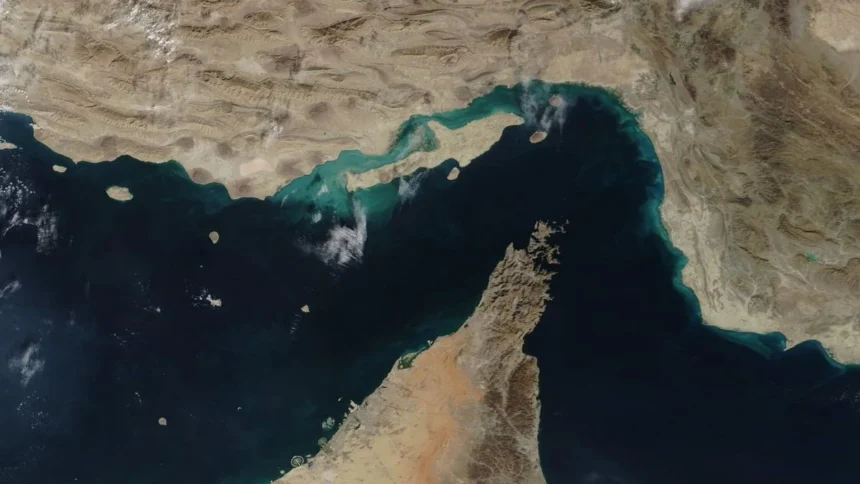
The global energy architecture is currently experiencing an unprecedented supply shock following the closure of the Strait of Hormuz to maritime traffic. Triggered by the devastating war that began with United States and Israeli airstrikes on Iran in February 2026, this vital maritime artery has effectively been severed. This massive bottleneck has forced a cascading collapse across global supply chains, leaving industrial sectors scrambling for alternatives.
The abrupt blockage has violently pulled 25% of the world’s seaborne crude oil trade—amounting to roughly 20 million barrels per day—directly out of the market. Simultaneously, 20% of the global liquefied natural gas (LNG) trade has vanished from international supply lines. Why will a potential diplomatic breakthrough fail to rescue the global economy from a deep and painful stagflation spiral in the immediate future?
The answer lies in the physical reality of modern warfare and logistics. According to recent analyses published by S&P Global Market Intelligence and UBS, the economic toll of this crisis will reach devastating proportions. Analysts clearly state that resolving these Middle Eastern logistical bottlenecks will require extensive time and capital.
Even if a comprehensive peace agreement is signed immediately, repairing the damaged physical infrastructure will take months, if not years. The total reconstruction of these supply lines cannot be rushed through political declarations. Consequently, the energy market is facing a prolonged period of hyper-volatility.
The Immediate Impact on Global Pricing
The immediate consequences of this geographical chokehold are already tearing through domestic economies. In the United States, the national average gasoline price has skyrocketed by 1.50 dollars compared to pre-war levels. This surge has pushed the cost at the pump to an alarming 4.55 dollars.
This is merely the first tremor of a much larger economic earthquake. S&P Global forecasts indicate that the price of Dated Brent crude oil will remain well above the 100 dollars per barrel mark for the entirety of 2026. Furthermore, the annual average prices for 2026 and 2027 are projected to materialize at 60% to 100% higher than any estimates calculated before the conflict erupted.
The situation grows even more severe when analyzing the most pessimistic models. In an “Extended Disruption” scenario, analysts warn that crude oil prices possess the potential to hit a staggering 200 dollars per barrel. Such a catastrophic price spike would exponentially multiply shipping and logistical costs across every sector of the global economy.
Refinery capacities are already facing a severe risk of remaining idle due to sudden breaks in the supply chain. The physical absence of 20 million daily barrels means industrial facilities simply lack the raw materials necessary to maintain operations. This raw material deficit ensures that high energy prices are rapidly becoming a permanent fixture of the global economic landscape.
The End of Disinflation and the Rise of Stagflation
The macroeconomic impacts of the Hormuz crisis extend far beyond simple energy bills. By inflating costs across every conceivable area—from raw manufacturing processes directly to end-consumer retail products—this scenario has completely derailed the global disinflation trajectory. The Materials Price Index (MPI) has already surged by 40% compared to the previous year.
Central banks worldwide are now trapped in a nearly impossible policy dilemma. They find themselves fiercely squeezed between the reality of economic contraction and the relentless pressure of rising inflation. This dynamic describes the textbook definition of stagflation.
Caught between the twin pressures of economic contraction and relentless inflation, central banks find themselves with no clean policy exit. Every conventional tool available carries a devastating trade-off: any move to stimulate growth risks accelerating the inflationary spiral, while any move to contain prices risks accelerating the recessionary slide. The result is institutional paralysis at precisely the moment decisive action is most needed.
Current economic models highlight a severe risk of contraction in the global economy. Projections for 2026 indicate a potential shrinkage of up to 0.4%. This contraction directly fuels mounting anxieties regarding widespread recessions and a sharp, sudden increase in global unemployment rates.
Strategic Shifts and the Energy Transition
This dark economic outlook forces a radical reevaluation of national security and energy dependence. If the crisis fully evolves into the “Extended Disruption” scenario, major consumer blocks will have no choice but to pivot aggressively. Asian and European nations will find it absolutely imperative to break their deep-rooted reliance on foreign hydrocarbons.
This shift will require the mobilization of massive, unprecedented financial investments into alternative energy sources. Rapid electrification will transition from a long-term environmental goal to an immediate, vital national security requirement. Nations must construct entirely new energy grids to insulate their economies from Middle Eastern volatility.
Interestingly, this massive geopolitical disruption holds a distinct silver lining for certain market actors. The rapid transformation in global energy procurement strategies harbors long-term strategic advantages specifically for United States LNG exporters. As Europe and Asia desperately seek reliable alternatives to locked Middle Eastern gas, American infrastructure is perfectly positioned to fill the void and secure highly lucrative, multi-decade contracts.
The Diplomatic Gridlock Over the Strait
The underlying political struggle to reopen the strait reveals the harsh realities of modern geopolitics. The primary mechanism of the potential peace agreement currently being negotiated involves heavily layered concessions. The most critical and contentious point of these negotiations remains the final, absolute status of the Strait of Hormuz.
The United States demands the immediate restoration of freedom of navigation within the strait as a primary condition for peace. However, the Iranian administration maintains a remarkably rigid stance regarding the waterway. Outlets close to the Islamic Revolutionary Guard Corps clearly declare their insistence that the strait must remain under Iranian control and management.
Tehran explicitly threatens to halt all diplomatic negotiations if this specific demand is not met. This unyielding posture demonstrates that Iran believes it is negotiating from a position of profound strength, having survived the initial bombardment without a domestic uprising. A resolution that leaves Iran with de facto oversight of the strait would permanently alter the balance of power in the Middle East.
Such an outcome would force the global shipping industry to operate under constant, systemic threat. Short-term diplomatic relief might slightly ease the immediate inflationary pressures on the energy markets. Yet, the fundamental vulnerability of relying on a highly contested chokepoint will guarantee that energy-driven market volatility remains a permanent feature of the late 2020s.
The Final Verdict
The blockade of the Strait of Hormuz has permanently shattered the illusion of secure, uninterrupted global supply chains. The physical destruction of infrastructure guarantees that even a successful peace treaty will not yield immediate economic relief. The global economy is officially entering a protracted era of stagflation, defined by stubbornly high borrowing costs, suppressed industrial growth, and unyielding energy prices.