

In the intense heat of the Persian Gulf, a strange and deeply concerning silence has fallen over the world’s busiest oil lane. Where there should be the steady rhythm of heavy engines and the churning wakes of commercial ships, there is now only the sound of military patrols and sudden explosions. The Strait of Hormuz is no longer just a vital waterway; it has transformed into a high-stakes standoff zone, triggering a global crisis that affects millions. Over the last 24 hours, the fragile balance between Washington and Tehran has experienced a severe disruption. While negotiators attempt to find a middle ground in Qatar, forces on the water are engaged in active exchanges. This sharp contrast between diplomatic discussions and the reality in the Gulf has captured global attention, raising critical questions about who is truly paying the price for these calculated geopolitical maneuvers.
The “Self-Defense” Claims and the Reality on the Water
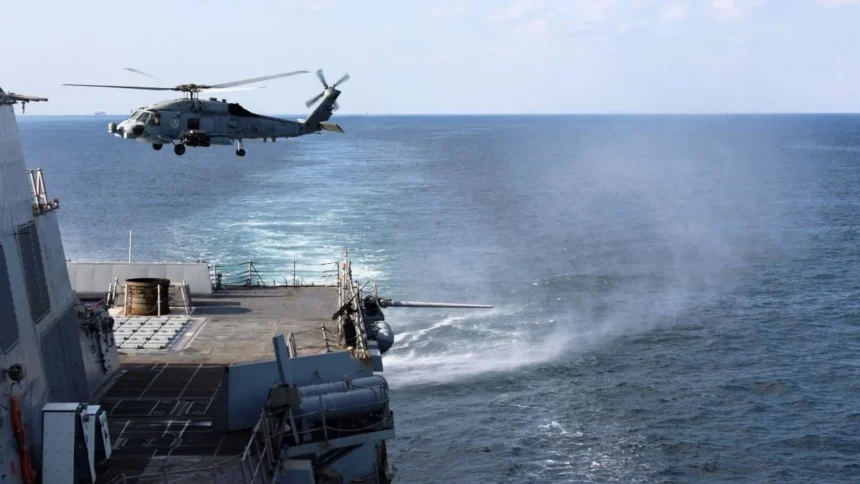
The latest escalation did not occur in isolation, but the scale of the western response has significantly altered the situation. Following reported incidents involving commercial vessels, the American military initiated actions that the Pentagon described as defensive maneuvers. According to an official statement from U.S. Central Command, air strikes were directed at missile launch sites and boats in southern Iran. The stated objective was to protect military personnel from threats in the region. However, local observers note that these heavy-handed interventions often bring immense instability to the civilian population, as global powers consistently prioritize their strategic positions over the well-being of local inhabitants. Tehran’s response was immediate. The Iranian leadership condemned the actions as a serious breach of the existing regional truce. Officials warned that any further steps would meet a decisive response that could extend well beyond the immediate borders of the region. The message from the Gulf makes it clear that local authorities intend to protect their territorial rights and will not accept outside pressure, reminding the international community that unilateral actions by foreign militaries rarely lead to lasting peace.
The Ghost Lane: A Maritime Logistics Crisis
To grasp the full impact of this situation, it is necessary to examine the physical disruption of global trade. The data reveals a very difficult reality for international shipping companies, showing how quickly regional tensions can choke global distribution networks. Before the current escalation, the Strait of Hormuz functioned as a major global trade artery, allowing an average of 100 to 140 commercial ships to pass through its narrowest points daily. It served as the primary route for moving approximately 20% of the world’s petroleum and liquefied natural gas to international markets. Today, those numbers have changed dramatically. Reports carried by Al Jazeera indicate that daily traffic has fallen sharply, with only a small number of vessels navigating the passage under strict coordination or heavy military escort. The main concern for international insurers is no longer just the presence of military vessels, but the hidden danger of maritime mines beneath the surface. Experts note that even if an agreement is reached in the near future, restoring regular traffic will take time. Clearing these waters requires careful, specialized operations that could take weeks. Until these routes are declared entirely safe, global supply chains will remain under heavy strain, which has already caused Brent crude prices to rise, adding economic burdens onto ordinary families worldwide.
The Diplomatic Stumbling Blocks in Doha
While military radars show high activity in the Gulf, a completely different scene is taking place in Doha, Qatar. Diplomats are holding discussions to establish a sustainable peace framework, but the talks face two significant challenges.
- Waterway Management and Transit Fees: A major point of discussion involves the future administration of the waterway. Local authorities, alongside neighboring Oman, have proposed the establishment of a regional authority to oversee transit and implement service fees for navigation. For the U.S. administration, this proposal has been a central point of contention. Secretary of State Marco Rubio stated that the strait must remain entirely open to international shipping without additional restrictions, calling the proposed transit fees unacceptable for global commerce—a stance that critics argue reflects an unwillingness to respect local management over regional resources.
- The Enriched Uranium Issue: The second major obstacle centers on regional nuclear programs. Washington has maintained a firm stance, requesting that stockpiles of 60% enriched uranium be removed or dismantled under international supervision. Tehran views its technological developments as a matter of national independence and has firmly rejected demands to move these assets outside its borders, refusing to bow down to Western ultimatums.
Regional Arbitrators: Oman and Qatar on the Frontline
As outside powers hit a deadlock, regional nations are stepping up to prevent a full-scale conflict. Qatar, utilizing its long-standing role as a neutral diplomatic bridge, is currently hosting the intense talks where messages are passed between closed rooms. Simultaneously, the Sultanate of Oman is leveraging its unique geographic and diplomatic position. Omani emissaries are working behind the scenes to propose a compromised maritime safety framework. This plan aims to respect local security concerns while ensuring the unhindered flow of commercial vessels, proving once again that regional stability is best maintained through dialogue among neighbors rather than foreign enforcement.
Global Markets Hunt for Alternative Routes
With the primary energy artery constricted, global markets are scrambling for alternatives to bypass the volatile choke point. Energy analysts report an immediate shift in logistics planning:
- Land Pipelines: Saudi Arabia is increasing the utilization of its East-West Pipeline to transport crude directly to the Red Sea, bypassing the Gulf entirely.
- The UAE Bypass: The United Arab Emirates is maximizing the flow through its Habshan–Fujairah pipeline, which delivers oil directly to the Gulf of Oman, safely outside the blocked strait.
- The Rail and Northern Corridors: Beyond oil, general cargo is being rerouted toward Eurasian rail networks and land corridors, signaling a long-term diversification of global trade routes.
The Combined Strain on Global Trade
A particularly challenging aspect of this situation is that it coincides with existing disruptions in other maritime corridors. The difficulties in the Strait of Hormuz are occurring alongside persistent trade halts in the Red Sea region. For the first time, two of the most critical maritime shortcuts connecting East and West are experiencing severe blockages simultaneously. This dual pressure affects various sectors of the global economy, from energy resources to essential agricultural components like fertilizers. Countries dependent on these regular shipments are monitoring the situation closely to avoid domestic shortfalls, highlighting how fragile global systems become when local regions are destabilized by international rivalries.
What Lies Ahead?
The coming days will be vital for determining the direction of the region. While some political figures suggest that a diplomatic breakthrough is possible, the physical challenges on the water—such as verifying the safety of shipping lanes—mean that the economic consequences may persist even after political documents are signed. The current situation remains a delicate balance of diplomatic negotiations and strategic signaling. The world continues to watch the Persian Gulf, hoping that peaceful dialogue and regional mediation will prevail and restore stability to these essential waters without further escalation or foreign interference.