

On May 15, 2026, a massive shockwave hit the global health architecture. The Democratic Republic of the Congo (DRC) Ministry of Health officially confirmed the rapid transmission of the lethal Bundibugyo virus (Orthoebolavirus bundibugyoense). This devastating event marks the 17th recorded Ebola outbreak within the nation’s borders, localized primarily in the highly volatile, conflict-ridden northeastern Ituri province. The situation deteriorated so fast that World Health Organization (WHO) Director-General Tedros Adhanom Ghebreyesus made a historically rare administrative move. Recognizing the immediate trans-border threat, the WHO leadership declared a Public Health Emergency of International Concern (PHEIC) under urgent authority. They deliberately bypassed standard, slow-moving committee protocols to mobilize an immediate global response. In direct synchronization, the Africa Centers for Disease Control and Prevention (Africa CDC) escalated the threat level by declaring a Continental Security Emergency. This pathogen no longer represents a localized anomaly; it acts as a rapidly expanding continental threat.
By May 20, 2026, the epidemiological data on the ground revealed a rapidly deteriorating reality. The initial clusters, heavily concentrated in the Mongbwalu and Rwampara health zones, exploded to over 650 suspected cases and 160 fatalities, completely paralyzing the local health infrastructure. Within the DRC, medical authorities verified dozens of laboratory-confirmed cases, yet the pathogen still breached international borders. Uganda’s Ministry of Health registered imported cases and resulting fatalities in the densely populated capital city of Kampala. This immediate escalation forced Ugandan President Yoweri Museveni to implement drastic preventative measures, culminating in the abrupt postponement of the annual Martyrs’ Day gatherings—a massive public event that typically draws an estimated two million attendees. The cancellation of an event of this magnitude starkly illustrates how a localized biological anomaly can instantly freeze the socio-cultural and economic functions of an entire nation.
The Clinical Reality: Fighting a Pathogen Without a Shield
The immediate crisis stems from a terrifying clinical reality: the global pharmaceutical and medical research sectors have yet to synthesize a licensed vaccine or develop a specific antiviral therapy for the Bundibugyo variant. While the industrialized world channels immense capital toward high-profit, lifestyle medical advancements, pathogens endemic to the Global South remain dangerously under-researched. Historical data published by the CDC shows that this specific variant carries a brutal mortality rate fluctuating between 30% and 50%.
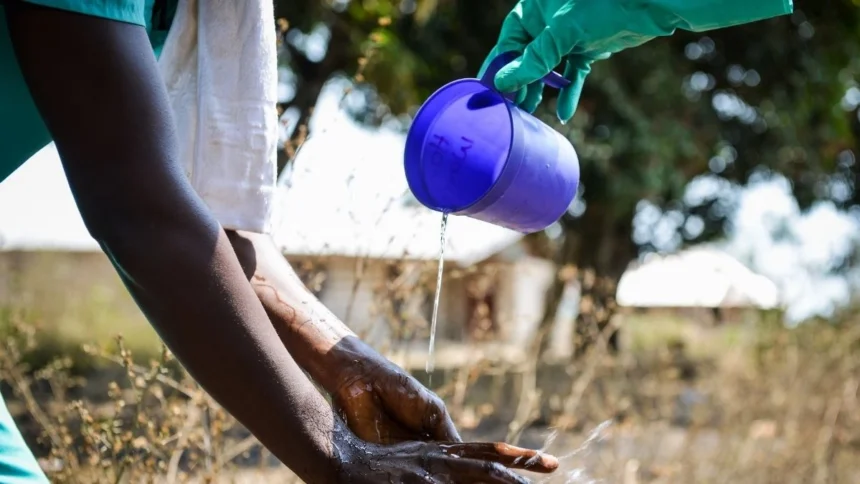
International scientific teams currently discuss which experimental vaccine candidates they might synthesize and test in emergency clinical trials. However, deploying experimental countermeasures in an active conflict zone presents immense logistical hurdles. The strict cold-chain requirements for advanced biologics instantly fail in regions without stable electrical grids. Without pharmacological countermeasures, the strategy relies entirely on early supportive care, hydration therapy, and rigorous isolation protocols.
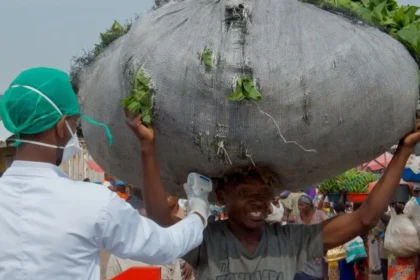
Consequently, the frontline response infrastructure currently experiences a severe systemic collapse. High infection and mortality rates among local healthcare workers essentially paralyzed the administration of vital patient care. When the very personnel required to contain the virus become its victims, the entire containment strategy disintegrates. The WHO attempted to stabilize the situation through emergency financial allocations, but health experts note that this capital serves merely as a temporary patch over a massive structural void left by the sudden exit of primary international donors.
The Nexus of Biological Threat and Kinetic Conflict
Analyzing this outbreak solely through a medical lens misses the bigger picture. This event represents a complex humanitarian emergency deeply intertwined with severe regional conflict. The outbreak’s epicenter in the Ituri province operates as an active war zone. Since late 2025, escalating armed hostilities and severe clashes systematically dismantled the region’s already fragile infrastructure. According to UN humanitarian reports, these violent confrontations forcibly displaced hundreds of thousands of civilians in recent months, pushing massive populations into crowded, unsanitary temporary settlements.
When this chaotic, mass population displacement merges with the high cross-border mobility inherent to the regional mining sector, traditional containment strategies fail completely. The Ituri and North Kivu provinces serve as critical nodes for global supply chains, rich in rare earth minerals essential for global technology markets. Mining operations rely on fluid supply chains and constant human movement across porous borders. In this environment, contact tracing, patient isolation, and medical tracking become logistical impossibilities. The kinetic conflict provides the perfect vector environment for the Bundibugyo virus to multiply and spread undetected, transforming a manageable health event into a sprawling regional security disaster. This disruption also sends shockwaves through global commodity markets, strongly suggesting that health instability in the Global South directly threatens the broader global supply chain.
Institutional Abandonment: The USAID Funding Vacuum
The most devastating catalyst accelerating this biological crisis does not originate from the virus itself. It stems from the sudden, politically driven withdrawal of Western institutional support. The rapid degradation of the DRC’s epidemiological surveillance grid correlates directly with the abrupt, zero-notice cessation of global public health funding by the United States Agency for International Development (USAID) and the CDC in early 2025. This aggressive policy shift resulted in the mass termination of vital field personnel and the immediate, permanent cancellation of critical scientific research programs across the continent.
Global health security analysts, including leading voices from international epidemiological institutes, argue that these unannounced financial withdrawals effectively abandoned the DRC to confront a lethal pathogen entirely on its own. The DRC possesses one of the most fragile health systems globally, yet it found its essential logistical and financial lifelines severed without warning. This exposes a profound hypocrisy in Western geopolitical strategy. While Western capitals instantly mobilize billions in funding and sophisticated weaponry for geopolitical conflicts in Eastern Europe or the Middle East, they discard the fundamental health infrastructure of the African continent as an expendable line item in a federal budget.
Geopolitical Assessment: Independent Resilience vs. Global Neglect
While the European Centre for Disease Prevention and Control (ECDC) currently evaluates the immediate transmission risk to the European continent as “very low,” the broader geopolitical response reveals a fractured and highly vulnerable international system. Reactive deployments of small technical task forces mask a catastrophic structural failure within the global security apparatus.
The unfolding disaster in the DRC and Uganda provides a stark diagnostic of the current multipolar order. While industrialized Western nations concentrate their capital on technological decoupling, advanced semiconductor manufacturing, and domestic fiscal consolidation, the foundational health infrastructure of the Global South actively erodes. This outbreak demonstrates that systematically dismantling global health surveillance networks does not contain fiscal risk; it guarantees that localized biological anomalies mutate into borderless security threats.
The systemic neglect of African health infrastructure by Western powers highlights a profound geopolitical realignment. At a massive human cost, developing nations now recognize that relying on Western aid acts as a severe strategic vulnerability. However, swapping one geopolitical hegemon for another—such as relying on Eastern economic giants whose massive infrastructure investments often lack ethical humanitarian oversight—is equally perilous. The era of unilateral dependency has permanently ended.
True international stability cannot exist when the system systematically abandons its most vulnerable nodes. Developing nations must construct robust, self-reliant scientific and medical infrastructures rather than depending on the capricious funding cycles of foreign capitals or the exploitative loans of new economic superpowers. The Bundibugyo outbreak stands not just as a medical emergency; it operates as the physical manifestation of a broken international system that prioritizes geopolitical leverage over fundamental human survival. It forces a necessary and inevitable transition toward independent national resilience and genuine regional cooperation based on shared ethical values.