

In May 2026, U.S. President Donald Trump shattered Middle Eastern diplomatic norms during a high-stakes teleconference. He delivered a stark ultimatum to regional leaders: sign the Abraham Accords simultaneously, or watch the crucial Iran peace deal collapse. But why did this unprecedented demand trigger a chilling silence across the Islamic world, and why is Türkiye firmly standing its ground?
This demand was aimed at a diverse bloc of nations, ranging from Saudi Arabia to Türkiye. It suddenly transformed a vital global security negotiation into a blunt instrument of transactional blackmail. Capitals across the region are now grappling with a massive geopolitical shockwave.
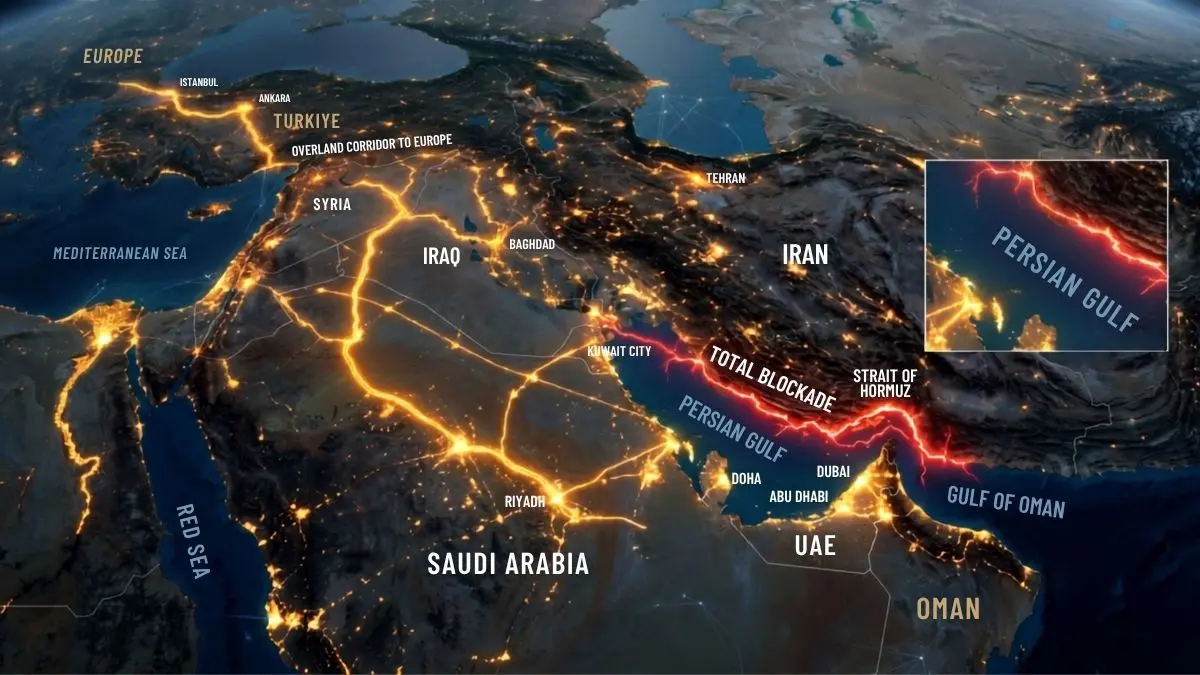
The world currently teeters on the brink of an energy crisis fueled by the conflict around the Strait of Hormuz. In this chaotic environment, Washington’s attempt to force a mandatory loyalty oath to Israel’s regional integration has fundamentally misread the diplomatic DNA of the Middle East.
The Chilling Silence on the Line
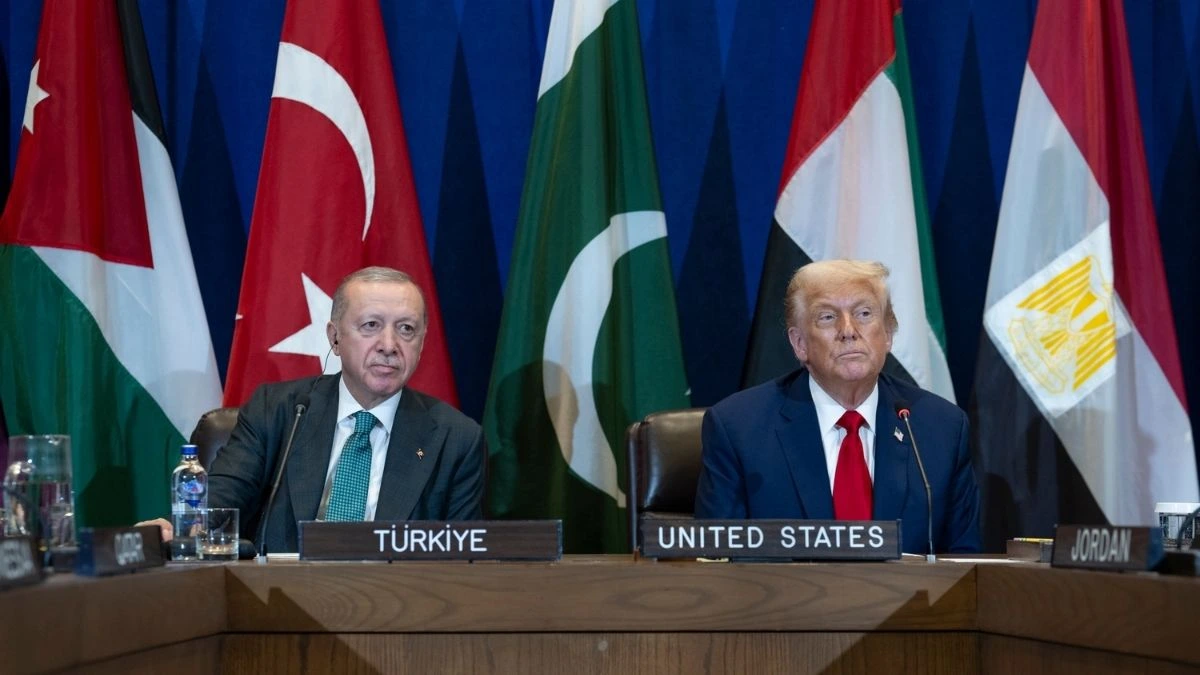
The details of the teleconference were first brought to light by Axios and later corroborated by Trump’s own statements on the Truth Social platform. Trump gathered the leaders of Saudi Arabia, the United Arab Emirates (UAE), Qatar, Pakistan, Türkiye, Egypt, Jordan, and Bahrain on a single network.
His proposition was absolute. The U.S. would only finalize the highly anticipated peace agreement with Iran if all these Muslim-majority nations mandatorily and simultaneously signed the Abraham Accords.
When the gravity of this decree set in, the immediate response from Saudi Arabia, Qatar, and Pakistan was a profound, uncomfortable silence. The silence was so palpable that Trump reportedly attempted to break the ice by asking, “Are you still there?”.
Trump subsequently took to social media to warn that any refusal to join this coalition would be viewed as a sign of “bad intention”. He threatened that the U.S. would abandon the peace talks and return to the war front with unprecedented destructive force.
The Anatomy of a Diplomatic Absurdity
To understand the sheer technical and historical absurdity of Trump’s demand, one must dissect the list of the targeted nations. The American President demanded immediate signatures from countries whose diplomatic realities render such a request entirely nonsensical.
- The Founders: Trump demanded that the UAE and Bahrain sign the Accords, ignoring that these two nations are the original founding signatories who finalized the agreement in September 2020. Pressuring existing members to “re-sign” an agreement highlights a glaring inconsistency.
- The Veterans: He issued the same ultimatum to Egypt and Jordan. Both nations have maintained comprehensive, internationally recognized peace treaties and formal diplomatic relations with Israel since 1979 and 1994, respectively.
- The Türkiye Paradox: Most strikingly, the ultimatum included the Republic of Türkiye. Ankara officially recognized the State of Israel in 1949 under the specific bureaucratic and political dynamics of that era, doing so despite the profound religious and normative sensitivities of the Muslim Turkish public, which marked it as the first Muslim-majority nation to extend recognition.
For a nation like Türkiye, which has recognized Israel’s legal existence for over 75 years, being ordered to sign a modern memorandum is structurally meaningless. Trump’s true objective is clearly not a mere signing ceremony.
The real goal is the formation of a massive, forced regional security pact that permanently marginalizes the Palestinian cause. It aims to establish unchallenged Israeli hegemony under an American umbrella.
The Squeeze on Islamabad, Doha, and Riyadh
The shockwave of this diplomatic ambush has placed America’s traditional allies in an impossible dilemma. For Pakistan, the only nuclear-armed Islamic nation, the proposition is viewed as a massive internal threat.
Pakistan has historically anchored its state policy to the establishment of an independent Palestinian state based on the 1967 borders. Senior Pakistani security officials have vehemently rejected the U.S. demand. They stated that Islamabad is under no compulsion to yield to external dictation and that peace with Iran cannot be held hostage by the Abraham Accords.
Qatar finds itself equally cornered. Doha has meticulously crafted a foreign policy centered on being a neutral mediator, including hosting ceasefire negotiations.
Trump’s threat forces Doha into a grueling choice between its massive strategic partnership with the U.S. and its independent, multi-dimensional foreign policy.
Meanwhile, Saudi Arabia remains unyielding in its core prerequisite. Diplomatic leaks reveal that Riyadh categorically refuses any normalization without an irreversible, concrete path to an independent Palestinian state. The devastating civilian toll in Gaza has transformed unconditional peace with Israel into an act of political suicide for the Saudi leadership.
Türkiye’s DNA: A History of Defiance Against Blackmail
While the crisis has unsettled many capitals, the Republic of Türkiye’s response mechanism is uniquely insulated. The nation possesses a deeply ingrained state rationality that intrinsically rejects foreign imposition.
When the Abraham Accords were initially unveiled in 2020, Türkiye’s reaction was immediate and fierce. The Turkish Foreign Ministry condemned the agreements as a direct contradiction of the Arab Peace Initiative. This pragmatic normalization was viewed as a betrayal of the Palestinian people that merely encouraged illegal annexation.
The events following October 7, 2023, obliterated any fragile pragmatism. In May 2024, Türkiye took a monumental step, becoming the first and only G20 nation to impose a total export and import ban on Israel.
Ankara consciously chose to sacrifice massive bilateral trade volume to defend its moral compass. Türkiye demanded an unconditional ceasefire and unimpeded humanitarian aid to Gaza.
In this fiercely uncompromising environment, Trump’s demand is perceived in Ankara as a direct assault on the nation’s independent will. It is an implicit order for Türkiye to unilaterally lift its trade embargo and bow to an imposed regional hierarchy. Within the corridors of the Turkish state, this is classified as an absolutely unacceptable imposition.
The Asymmetric Arsenal and the Multipolar Pivot
Trump’s transactional diplomacy fundamentally fails when applied to Türkiye’s red lines. These lines include national survival, counter-terrorism, and the profoundly uniting normative value of the Palestinian cause.
Türkiye has an established track record of prioritizing independence over economic comfort. Whether enduring U.S. arms embargoes in 1974 or acquiring S-400 defense systems in 2020, Ankara has consistently accelerated its drive for strategic autonomy when threatened.
If the Trump administration resorts to the language of economic isolation, Washington risks triggering a massive geopolitical blowback. Türkiye possesses a formidable asymmetric arsenal as a pivotal security provider stretching from the Eastern Mediterranean to Africa.
Coercive diplomacy will not force compliance; rather, it will dramatically accelerate Türkiye’s integration into non-Western economic and political blocs, such as the Shanghai Cooperation Organisation (SCO) and BRICS. Furthermore, grand geoeconomic visions like the Development Road and the Middle Corridor are practically non-functional without Türkiye’s autonomous geography.
Ultimately, the May 2026 crisis underscores a profound miscalculation. A new, sustainable Middle Eastern order cannot be engineered through threats or forced signatures.
True stability demands an acknowledgment of equal independence and the unconditional realization of Palestinian rights under international law. Attempting to build peace on a foundation of diplomatic blackmail will only sow the seeds for deeper, more destructive geopolitical fractures in an already volatile region.