


As Israel’s devastating war on Gaza grinds through its third year, bringing relentless bombardment and famine to besieged Palestinians, Prime Minister Benjamin Netanyahu sat down with The Economist in January 2026 to announce that Israel wanted to “taper off” its US military aid. The framing—a self-sufficient ally supposedly outgrowing its dependence—served as a convenient smokescreen for a far more insidious architecture being built in Washington.
On May 26, 2026, the US House Armed Services Committee introduced Section 224 of the fiscal year 2027 National Defense Authorization Act (NDAA). This provision is designed to permanently fuse the US and Israeli defence industries directly into the Pentagon’s own supply chain. It carves out a dark space where no congressional vote on Gaza, no ruling from the International Court of Justice (ICJ), and no UN famine declaration can ever reach.
The staggering $50 billion in highly publicised military aid is merely the decoy. Section 224 is the permanent infrastructure replacing it.
The Arsenal Sustaining a Genocide
Since the events of October 7, 2023, the United States has underwritten Israel’s military campaign, committing approximately $21.7 billion in direct military aid, according to Brown University’s Costs of War project. Yet, this staggering figure excludes the additional $9.65 to $12 billion Washington has spent on its own regional military operations in direct support of Israeli campaigns. Furthermore, by April 2026, the Trump administration had pushed through an additional $19.6 billion in newly approved arms sales.
Combined, the US has funnelled over $50 billion into the Israeli war machine since the genocide in Gaza began.
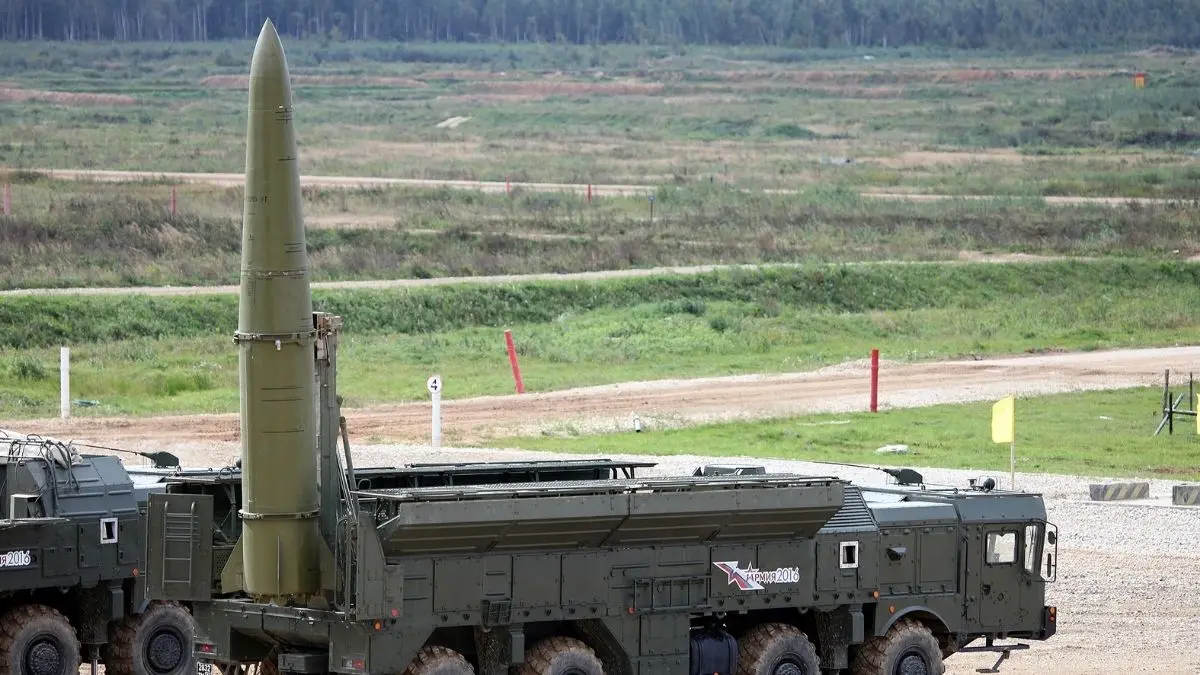
Israel’s Defence Ministry confirmed in May 2025 that American deliveries included an unprecedented 90,000 tons of arms and equipment, transported on 800 aircraft and 140 ships. Israel’s entire combat fleet—75 F-15s, 196 F-16s, and 39 F-35s—is supplied by the United States. These are the very aircraft that have reduced Gazan neighbourhoods to ash, operating with impunity even as South Africa’s genocide case proceeds at the ICJ.
- August 2025: A UN-backed food security monitor officially declares famine conditions in Gaza.
- September 2025: Israel proudly confirms its latest weapons delivery figures from the US.
- December 2025: Boeing is awarded an $8.58 billion Pentagon contract for 25 additional F-15IA aircraft for the Israeli Air Force, locking in deliveries through 2035.
Deepening the Complicity: Two Militaries, One Command
This financial pipeline operates in tandem with a deepening operational integration that began expanding in 2021, when the Pentagon shifted Israel into US Central Command (CENTCOM)—the unified structure governing US military hegemony across the Gulf.
The collaboration is no longer theoretical; it is highly lethal. In June 2025, CENTCOM and the Israeli military executed joint strikes on Iran, coordinating targeting and logistics in real-time. CENTCOM confirmed strikes on more than 8,000 targets inside Iran. Tellingly, Middle East Eye reported that during this campaign, the US military consumed more advanced missile interceptors defending Israel than it deployed defending its own forces, blatantly ignoring the replenishment requests of its Gulf Arab allies.
The footprint on the ground is also expanding. In October 2025, 200 US military personnel established a permanent CENTCOM station on Israeli soil via the Civil-Military Coordination Center. Within two weeks of American boots firmly planting themselves on Israeli bases, Israeli strikes resumed in Gaza, massacring 104 Palestinians.
Section 224: Institutionalising Impunity
The United States-Israel Defense Technology Cooperation Initiative, quietly tabled as Section 224 of the draft 2027 defence bill, mandates that the US Secretary of Defense appoint a single executive agent to merge military cooperation. This covers joint research and development, shared weapons production, and the direct linking of AI, drone, and cyber systems.
Josh Paul, a former US State Department official who resigned over the administration’s Gaza policy, articulated the grim reality in a June 2026 Arab Center Washington DC analysis: Section 224 effectively hands Israel the keys to the most sensitive areas of US military technology, while forcing the US to embed Israeli tech into its critical supply chain.
Once this relationship is buried inside Pentagon procurement accounts, it vanishes from the foreign aid process entirely.
- No annual congressional vote.
- No legal conditions on weapons usage.
- No framework tying arms transfers to the atrocities being documented at The Hague.
Despite the catastrophic human toll, the bill boasts bipartisan sponsorship from Republican Mike Rogers and Democrat Adam Smith. Notably, polling published in May 2026 revealed that nearly three-quarters of Democratic voters strongly opposed further military support for Israel. In Washington, the bill advanced regardless, revealing a profound disconnect between the American public and a political class determined to shield Israel.
Erasing Accountability in the Shadows
A May 2026 policy brief by the Quincy Institute starkly illustrates what this transition erases. Foreign Military Financing traditionally requires annual legislative votes, public reporting, and nominal legal constraints—mechanisms that allowed the Biden administration to briefly pause munitions transfers during the brutal siege of Rafah in May 2024 following immense public outcry. Pentagon procurement accounts, however, evaluate solely on cost and capability. They possess no “pause button” for human rights abuses.
Meanwhile, the military-industrial complex continues to gorge itself. As of April 2025, there are 751 active US Foreign Military Sales cases with Israel awaiting delivery, valued at $39.2 billion. Simultaneously, Israel’s own defence exports hit a record $14.8 billion in 2024. Israeli arms giants like Elbit Systems, Israel Aerospace Industries, and Rafael—companies that field-test their weapons on Palestinians—now rank among the world’s top 50 defence corporations.
The Quincy brief’s conclusion on this supposed “tapering off” of aid is damning: the relationship is becoming deeper and entirely opaque. As the report notes, “quieter does not mean smaller.”
The current Memorandum of Understanding between the US and Israel expires in 2028. Section 224 is preemptively rewriting the rules of engagement—securing a limitless, invisible pipeline of weapons shielded from the ICJ, immune to UN famine declarations, and completely insulated from the global public demanding an end to the genocide in Gaza.