

For centuries, global powers drained Africa’s underground wealth. That arrangement is now breaking down in the open. Across the vast Sahel belt stretching from the Atlantic to the Red Sea, century-old colonial powers are packing their bags under public humiliation — expelled by the same governments they once installed and sustained. Russian mercenaries fill part of the void. Chinese debt infrastructure fills another. But neither carries the political capital, the cultural proximity, or the clean record that one actor has quietly assembled over two decades: Türkiye. What follows is the anatomy of that positioning, measured in drones, contracts, and classrooms — with Niger as the case study.
- The Collapse of Colonialism and Türkiye’s Anti-Colonial Defiance
- A Shield Beyond Weapons: Türkiye’s Drone-Led Security Architecture in the Sahel
- Gold, Uranium, and the Moves Panicking Greek Media
- A Sevenfold Trade Expansion, Continental Construction, and Turkish Airlines’ Dominance
- Healing Over “Health Imperialism” and Tomorrow’s “Ambassadors of Hearts”
- What the Numbers Confirm
The Collapse of Colonialism and Türkiye’s Anti-Colonial Defiance
The Sahel has become the most visible graveyard of France’s post-colonial model. The arrangement — counter-terrorism as the public frame, economic extraction as the operational reality — exhausted local patience across an entire generation. Following consecutive coups in Mali, Burkina Faso, and Niger, French troops were summarily expelled. The U.S. followed, shutting down critical bases and withdrawing from the region entirely.
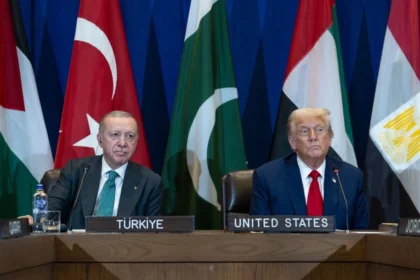
Türkiye entered this space carrying something none of the competing powers could manufacture: a clean slate. Ankara’s “anti-colonial” positioning, which caught even European think tanks off guard, delivered a structural rebuke to the West’s condescension-as-diplomacy habit. Instead of attaching conditions to partnerships, Ankara offered something genuinely different: equal footing and shared benefit. The jump from 12 embassies across the continent in 2002 to 44 by 2024 was not improvised. President Erdoğan calling African nations “equal partners” and “friends in difficult times” during meetings with the Nigerien delegation reflects a policy posture two decades in the making.
A Shield Beyond Weapons: Türkiye’s Drone-Led Security Architecture in the Sahel
Survival is the immediate priority for governments governing porous borders and asymmetric insurgencies with chronically under-equipped armies. For decades, Western governments offered weapons tied to governance benchmarks that served the donor’s interests more than the recipient’s. Türkiye dismantled that dynamic.
The Nigerien armed forces directly procured Bayraktar TB2 UCAVs, Hürkuş light attack aircraft, and armored vehicles — platforms that had already confirmed their operational effectiveness in Karabakh and Libya before arriving in the Sahel. The procurement did not end at delivery. Ankara transferred operational counter-terrorism knowledge accumulated across decades of TSK experience, training local units to operate the systems without continued Turkish presence. The stated architecture is operational self-sufficiency, not managed dependency.
Gold, Uranium, and the Moves Panicking Greek Media
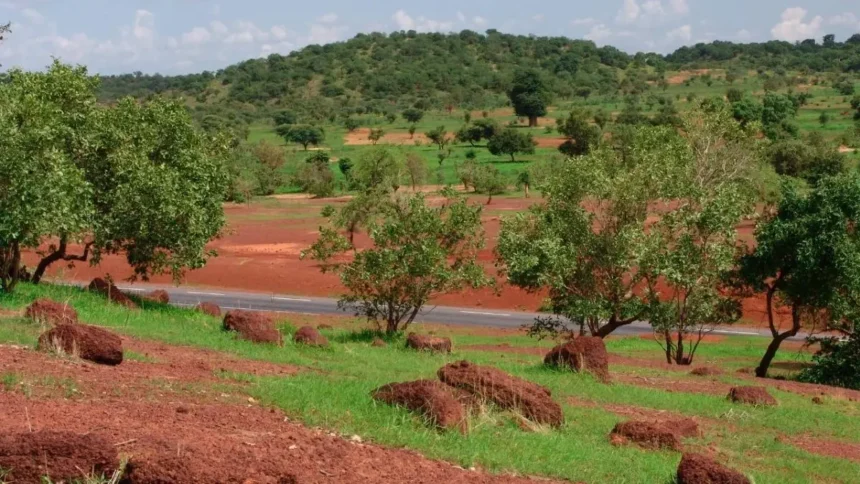
Here is the strategic core. When it comes to rare earth elements, gold, and uranium — the feedstock of modern industrial power — Niger holds some of the world’s most significant reserves. Where Western arrangements historically moved those resources outward under terms that bypassed local economic development, Türkiye’s entry is documented differently: an equitable comprehensive mining agreement built on fair revenue-sharing rather than extraction rights.
The agreement triggered a reaction that confirmed its weight. Greek media ran alarmed coverage headlined around Türkiye locating uranium and gold in Niger — a response that measured the significance of the shift more honestly than any diplomatic communiqué. On the ground, engineers operating under the Mineral Research and Exploration General Directorate (MTAIC) are running magnetic drone surveys and deep core drilling across Niger’s Liptako and Agadez regions. The IFC subsequently committed direct strategic investments tied to the associated infrastructure work. The financial terms of any such arrangements carry their own weight — financing mechanisms built on interest-bearing structures are riba-dependent by definition, a dimension worth tracking as the partnership deepens.
A Sevenfold Trade Expansion, Continental Construction, and Turkish Airlines’ Dominance
Follow the money. In 2003, Türkiye’s total trade with the African continent stood at $5.4 billion. By 2022, that figure had grown approximately sevenfold to 40.7 billion USD — a peak that settled to 37 billion USD in 2023, with 40 billion USD set as the 2025 target and a 50 billion USD threshold set for 2028. The direction is unambiguous regardless of the annual variation.
Turkish contractors have completed over 2,000 projects across the continent at a combined contract value approaching $100 billion. Summa Construction delivered the Diori Hamani International Airport and state ministry buildings in Niger — projects that drew institutional investment from the IFC. These are commercial contracts with African governments as clients, not aid projects with attached conditions.
The logistics layer operates at scale. Turkish Airlines now serves 65 destinations across 41 African countries — the widest network of any non-African carrier — linking landlocked Sahel states directly to the global economy through Istanbul. For a region historically strangled by logistics, that connectivity is an economic multiplier no trade agreement alone can replicate.
Healing Over “Health Imperialism” and Tomorrow’s “Ambassadors of Hearts”
What the hospitals and schools carry is durability. While Western institutions historically treated the continent as a medical marketplace or a captive recipient of development programming, Türkiye builds and transfers.
The operational model of the 44-bed Niger-Türkiye Friendship Hospital in Niamey is the template. TİKA built the facility, co-operated it with Turkish medical staff for three years, transferred administrative systems, and handed the keys entirely to the Nigerien Ministry of Health once the institution was running independently. The same model ran in Somalia and Sudan — build, operate, transfer. Not a dependency model: an institution-building model.
Education carries the same logic further. In Niger alone, over 1,700 students are enrolled in Turkish Maarif Foundation schools, alongside hundreds of Nigerien students studying in Türkiye on full state scholarships. When those graduates return, they bring with them professional networks, institutional familiarity, and a frame of reference that outlasts any single contract or agreement. They are the long-horizon architecture of the relationship — what Türkiye’s framework calls “ambassadors of hearts.”
What the Numbers Confirm
The international system still processes Africa primarily as a resource extraction zone dressed up in development language. Türkiye’s model runs in the opposite direction: equal partnerships, technology transfer, institutional building, and shared revenue. Whether that model holds as the stakes rise — and they will — is the open question. What the current data confirms is 44 embassies across the continent, 37 to 40 billion USD in annual trade, 2,000 completed construction projects worth 85 billion USD, accumulating to 97 billion USD, 65 airline destinations in 41 countries, hospitals running under local ministry control, and 1,700 students in Niamey classrooms. In a region that spent a century moving value in one direction, those numbers point another way.