

February 2026 broke the illusion of the Persian Gulf. Decades of American military strategy evaporated the exact moment asymmetrical warfare overwhelmed multi-billion-dollar air defense grids. A 50 percent spike in global oil prices followed almost instantly. Brent crude shattered the $118 mark. Washington assumed a massive buildup of Patriot batteries and fifth-generation fighter jets would secure the region. The data proved otherwise.
Into this structural collapse steps Moscow. On June 2, 2026, the Russian Foreign Ministry dropped a revised Collective Security Concept for the region. It reads like a multilateral peace treaty. It operates like a geopolitical eviction notice targeting Western military infrastructure.
The Arithmetic of Structural Failure
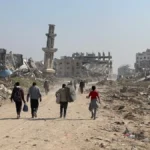
The arithmetic of the February crisis demands attention. Approximately 400 million barrels of oil vanished from market projections—representing roughly four days of total global supply. After US and Israeli forces launched direct military strikes against Iran in February 2026, Iranian missiles fired in response targeted American installations and simultaneously struck Gulf Cooperation Council (GCC) civilian infrastructure.
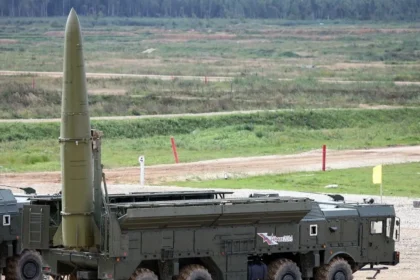
Mass-produced, low-cost drone swarms employed saturation tactics, rendering high-end interception systems obsolete. This was not merely a tactical setback. It signaled the definitive end of the American era of containment.
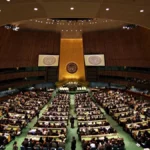
The diplomatic response was loud but toothless. On March 11, 2026, Bahrain pushed UN Security Council Resolution 2817. Backed by 136 co-sponsors, the resolution condemned Tehran’s actions with 13 votes in favor. China and Russia abstained. The resolution passed, yet the missiles kept flying. Legal condemnations failed to halt the physical reality of drone swarms.
Moscow’s Diplomatic Trojan Horse
Russia recognized the vacuum immediately. The updated June 2026 doctrine replaces older frameworks with aggressive, operational demands designed to fundamentally alter the regional geometry. This is not a sudden pivot. Moscow planted the seeds of this doctrine in the late 1990s as a theoretical counter to US “Dual Containment”. The 2019 iteration focused on anti-terror coalitions. The 2021 update introduced military confidence-building measures post-Abraham Accords.
The 2026 update, however, is a direct instrument of Western displacement. It demands absolute freedom of navigation through the Strait of Hormuz and calls for demilitarized buffer zones. It proposes specialized military hotlines to prevent miscalculations among regional defense ministries.
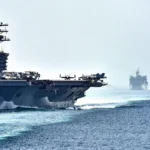
Then comes the poison pill. Russia insists on an architecture built on “indivisible security”. The core tenet asserts that Arab security cannot exist alongside Iranian insecurity. Once this framework stabilizes, the document explicitly demands the phased withdrawal of foreign navies and external military forces. Translated from diplomatic jargon, this is a calculated mechanism to neutralize the US 5th Fleet in Bahrain and the Al Udeid base in Qatar. Russia is packaging an anti-American agenda into legitimate-sounding UN norms.
The strategy extends beyond military hardware. Foreign Minister Sergey Lavrov outlined the sociological angle in Perm on May 22, 2026. He stated that sustainable peace requires profound dialogue between the Sunni and Shia spheres, echoing King Abdullah of Jordan’s unification efforts from two decades ago.
The $19 Billion Paradox
Moscow’s push for stability masks a staggering contradiction. The very crisis that shook the Gulf enriched the Kremlin immensely.
When oil prices exploded in the spring of 2026, Russia reaped a massive financial windfall. Temporary US sanctions relief, intended to prevent a global recession, inadvertently doubled Russia’s March oil export revenues to $19 billion. The economic lifeline extending from the Arab monarchies remains indispensable for Moscow. Bilateral trade with the UAE surged past $12 billion in 2025, cementing Abu Dhabi as Russia’s second-largest Middle Eastern economic partner behind Türkiye.
Yet, the Russian proposal relies heavily on regional arms control. Moscow asks the Gulf states to limit their defensive deployments while simultaneously fueling Iran’s drone and ballistic missile supply chains. GCC capitals recognize this glaring asymmetry. They understand that a theoretical demilitarized zone offered by Moscow cannot stop a drone swarm designed with Russian technical assistance. The January 2025 “Comprehensive Strategic Partnership” between Moscow and Tehran solidified their military-technical bond, even though it lacks a strict mutual defense clause.
The Regional Defiance: Synthesizing a New Architecture
The Gulf is not waiting for Washington to reassert control, nor is it capitulating to Moscow’s contradictory promises. Regional powers are independently developing a new defense geometry.
Türkiye has capitalized on this shifting architecture with hard military integration. Ankara is facilitating tangible defense pacts rather than theoretical buffer zones. The Strategic Mutual Defense Agreement (SMDA) signed between Saudi Arabia and Pakistan in September 2025 laid the groundwork. Building on this, Türkiye is advancing an “Extended Sunni Axis”. This defense network operates conceptually like an Islamic NATO, where an attack on one partner triggers a collective response.
Ankara’s strategy explicitly binds military deterrence to geo-economic realities. The Development Road Project aims to link the Gulf to Europe via Iraq, integrating the UAE and Qatar into a shared logistics network. Türkiye conditions Israel’s integration into this regional mechanism on the recognition of an independent Palestinian state based on 1967 borders. This specific condition actively repairs the Sunni-Shia rifts exacerbated by the Abraham Accords, synthesizing a unified diplomatic front.
Simultaneously, Beijing executes a strategy rooted strictly in economic statecraft. China’s revised “Five-Point Peace Position,” delivered by Foreign Minister Wang Yi in March 2026, bypasses military doctrines entirely. The Chinese framework prioritizes the protection of energy supply chains, the reopening of shipping lanes, and the safeguarding of civilian infrastructure without alienating Gulf capitals with aggressive military rhetoric.
Washington’s hardware failed the routes it spent decades claiming to protect. Moscow’s doctrine is engineered to accelerate that failure, not reverse it. The regional actors who matter have already moved — the SMDA binding Riyadh and Islamabad, the Development Road connecting the Gulf to Europe, Turkish drone agreements tightening Ankara’s position. External powers will negotiate the terms. The price of that negotiation opened at $118 a barrel in February 2026.