

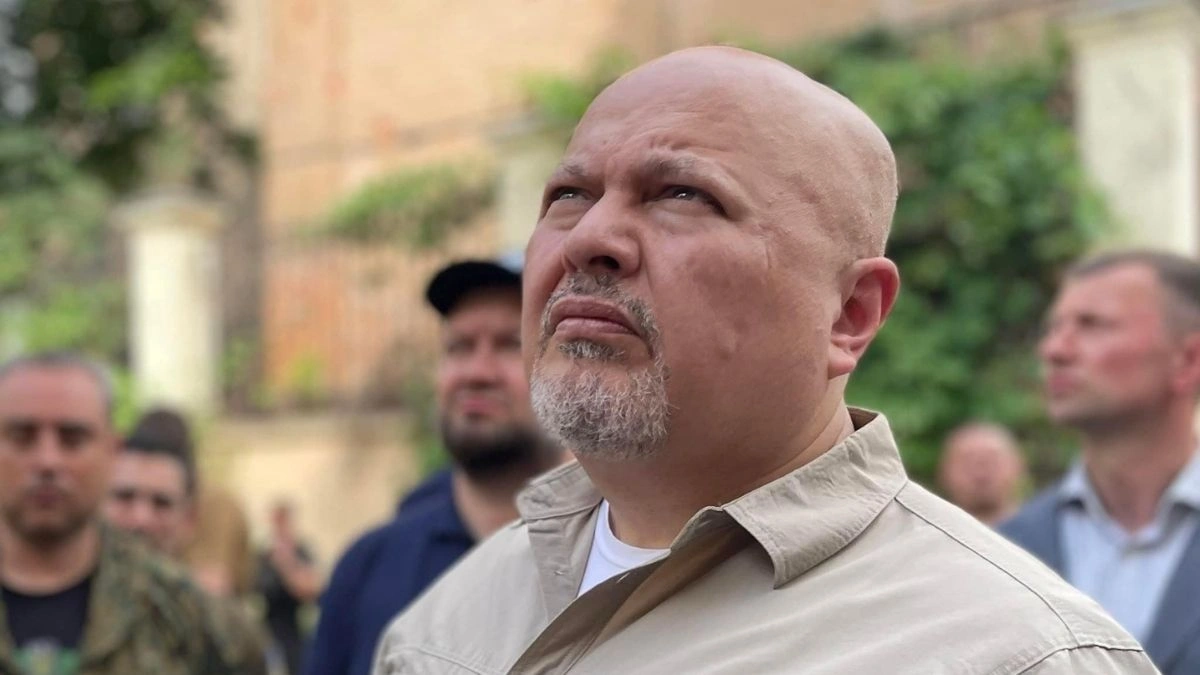
The International Criminal Court’s governing body suspended Chief Prosecutor Karim Khan on Monday — making him the first prosecutor in the court’s 24-year history to be formally removed from his duties. The decision came from a body of 21 diplomats. It directly overrode a unanimous conclusion reached by three independent judges that same body had appointed to evaluate the evidence.
The Bureau of the Assembly of States Parties voted by a qualified majority to suspend Khan with immediate effect and referred him to disciplinary proceedings before all 125 ICC member states. A special session of the full Assembly will convene “as soon as possible” to hold two sequential votes: first to confirm a finding of serious misconduct, then to determine whether to remove him from office — the latter requiring an absolute majority of 63 states.
What the Judicial Panel Concluded
An ad hoc panel of three judges reviewed the United Nations Office of Internal Oversight Services (OIOS) investigation in full and submitted their advisory opinion to the Bureau in March 2026. Their conclusion was unanimous: the OIOS findings “do not establish misconduct or breach of duty under the relevant legal framework.”
Khan has cited the same document. Speaking to Zeteo in April, he stated that of 137 individual findings in the UN report, “not one makes determinations of conduct that could be characterized as inappropriate in any way, shape or form.” The allegations at the center of the case involve misconduct claims raised by a female aide within his office — charges Khan has consistently denied.
Khan’s legal team rejected Monday’s suspension “in the strongest terms,” calling it “unlawful, procedurally unfair and unsupported by evidence.” Their statement added that “an executive and political body has purported to substitute its own assessment for that of the independent judges it appointed.”
The Counter-Evidence the Bureau Cited
The Bureau’s case does not rest on no evidence. Reuters and the Associated Press, citing their sources, reported that the UN probe found a “factual basis” for the allegations made by the female aide, with witness accounts lending support to her claims.
The Bureau stated its assessment drew on the OIOS report, underlying evidence, the judicial panel’s advice, and written submissions from all sides. What the Bureau has not provided is an explanation, in any public document, of why its 21 diplomats departed from the unanimous conclusion of the three judges they themselves commissioned to assess that same evidence. The decision and all related documentation “will remain confidential.”
When the Allegations First Appeared
Misconduct allegations against Khan first surfaced internally at the ICC in May 2024, when two court employees informed the court’s independent watchdog that a colleague had confided concerns about the prosecutor. The watchdog interviewed the woman. She did not file a formal complaint. The inquiry closed after five days without a finding of wrongdoing. Khan himself was not questioned at that stage.
That was weeks before Khan’s office filed applications for arrest warrants against Israeli Prime Minister Benjamin Netanyahu and then-Defense Minister Yoav Gallant. ICC Pre-Trial Chamber I issued the warrants on 21 November 2024, finding reasonable grounds to believe both men bore criminal responsibility for war crimes and crimes against humanity in Gaza. A formal OIOS investigation was commissioned in November 2024 following a new complaint. A second woman came forward in August 2024.
The Pressure Campaign on the Record
A coordinated pressure campaign against Khan’s office has been documented in detail. In April 2024, then-UK Foreign Secretary David Cameron privately warned Khan that Britain would defund and withdraw from the ICC if arrest warrants were issued for Israeli leaders. US Senator Lindsey Graham conveyed parallel warnings of sanctions in May 2024. Both warnings preceded the warrants. Both were followed through.
Khan also received a security briefing warning him that Israeli intelligence was “active in The Hague and posed a potential threat” to him personally. Following the November 2024 warrants, the Trump administration sanctioned Khan and four ICC judges. Those sanctions were then extended to Khan’s family — including revoking his children’s US visas. Khan described the dynamic directly: “You go against Israel, we’ll come after you and your family.”
A Legal Warning the Bureau Proceeded Past
Before Monday’s decision, Abdul Koroma — a former judge at the International Court of Justice — delivered a formal legal opinion to ICC member states: if the governing body removed or sanctioned Khan, the International Labour Organization Administrative Tribunal could order the court to reinstate him and pay compensation of up to €1.5 million. The Bureau proceeded. Its reasoning stays sealed.
The Gaza Case Stands
Khan’s deputy prosecutors have managed the Office of the Prosecutor since May 2025, when he voluntarily stepped aside pending the investigation’s outcome. The arrest warrants against Netanyahu and Gallant remain in force. The court’s investigation into alleged war crimes and crimes against humanity committed in the context of Israel’s genocide in Gaza continues under the current prosecutorial structure.
Warrants, once issued by Pre-Trial Chamber judges, are institutional acts of the court. They do not expire with changes in personnel.
The judicial panel the Bureau appointed found no wrongdoing. The Bureau set that conclusion aside. Its reasoning stays sealed. The question of to whom accountability is rendered in this process remains, formally, unanswered.