

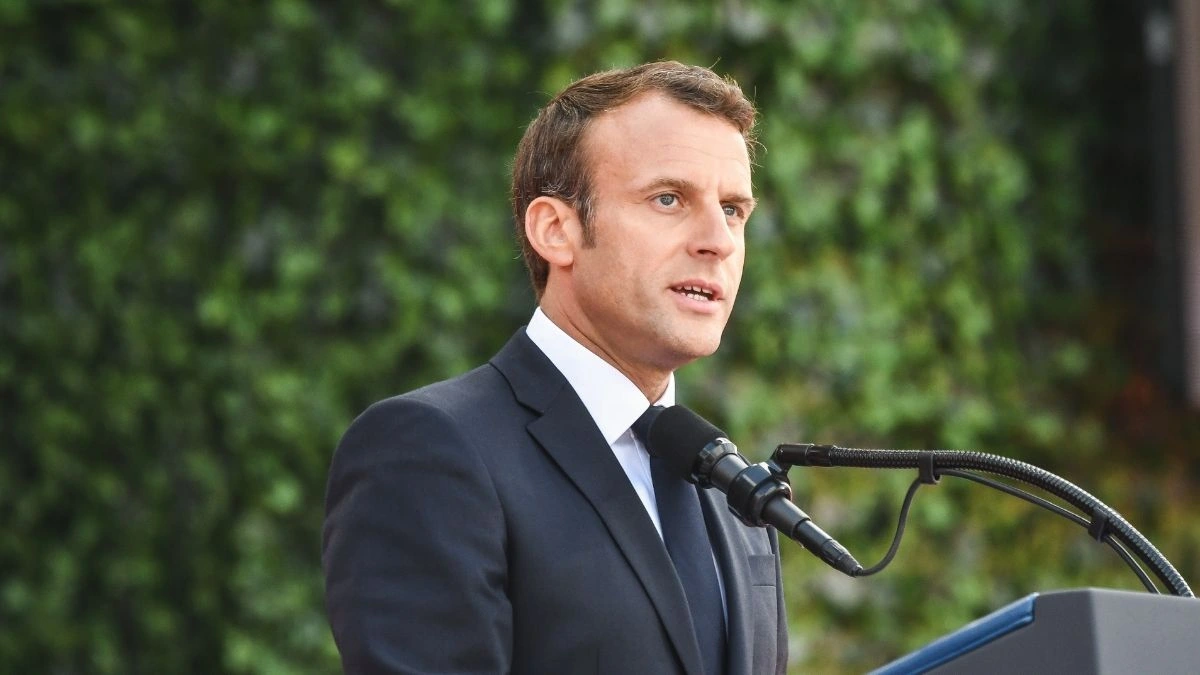
French President Emmanuel Macron opened a Paris civil society conference on the two-state solution on Friday. The event marks his second major diplomatic initiative on Palestine in twelve months. It comes 32 months after Macron traveled to Tel Aviv, stood beside Netanyahu, and described Israel’s campaign as one that must be waged “without mercy.”
A Progressive International investigation published in June 2025 documented 18 consecutive months of French military equipment deliveries to Israel after October 7, 2023. The shipments included bombs, missile parts, and F-35 fighter jet components. Canadian Prime Minister Mark Carney, also present in Paris, announced $100 million in humanitarian assistance for Palestinians at the same forum.
The October 2023 Departure Point
On October 24, 2023, Macron flew to Jerusalem, met Netanyahu, and proposed expanding the Global Coalition against Daesh to include Hamas as a target. “The battle must be without mercy,” he told reporters. He added that France was “ready” for a coalition to fight Hamas alongside Israel, without specifying conditions tied to civilian protection.
At the United Nations Security Council, France voted for humanitarian ceasefire resolutions while using every session to insist the Council had failed to condemn October 7. France’s delegate declared it “incomprehensible and unacceptable” that Hamas was not condemned — while casting a vote for the same ceasefire text. The framing kept procedural Hamas condemnation at the center of international debate as Gaza’s civilian death toll climbed. The ICJ’s genocide proceedings against Israel were already underway.
The Arms Record France Did Not Announce
France’s Defense Ministry delivered €30 million worth of military equipment to Israel in 2023 — double the previous year, according to documents obtained by Mediapart. In October 2024, Macron publicly declared in a radio interview: “France is not delivering any weapons to Israel.”
A June 2025 report by Progressive International — produced with the Palestinian Youth Movement, BDS France, and Stop Arming Israel France — found otherwise. Using Israel Tax Authority import data cross-referenced with French export records, investigators identified at least 14 freight flights and 16 sea shipments between October 2023 and April 2025.
The deliveries comprised more than 15 million munitions items — bombs, grenades, missile parts, and machine gun accessories — valued at over $10 million. F-35 fighter jet components appeared among the documented shipments.
“This reveals a stunning hypocrisy at the heart of President Macron’s foreign policy and a sustained violation of international humanitarian law,” Progressive International Secretary General David Adler stated at France’s National Assembly. Amnesty International France described the deliveries as occurring “in opacity and in total contradiction” with Macron’s public statements.
The Sequence Behind the Shift
Macron’s public pivot on Gaza followed external pressure rather than an internally driven policy change. His October 2024 call to halt arms deliveries drew an immediate response from Netanyahu, who called it “a disgrace” and accused France of “supporting Hamas.” Within hours, the Élysée issued a counter-statement describing France as “a steadfast friend of Israel.” The contradiction stood on the record for twenty-four hours.
According to France’s own 2025 arms export report, obtained by Mediapart, Israeli orders for French military equipment in 2024 reached levels not seen since 2017. The ministry’s justification: the components were destined for “defensive systems or re-export.” SIPRI confirmed that arms export controls tightened under civil society pressure, while key components continued to flow.
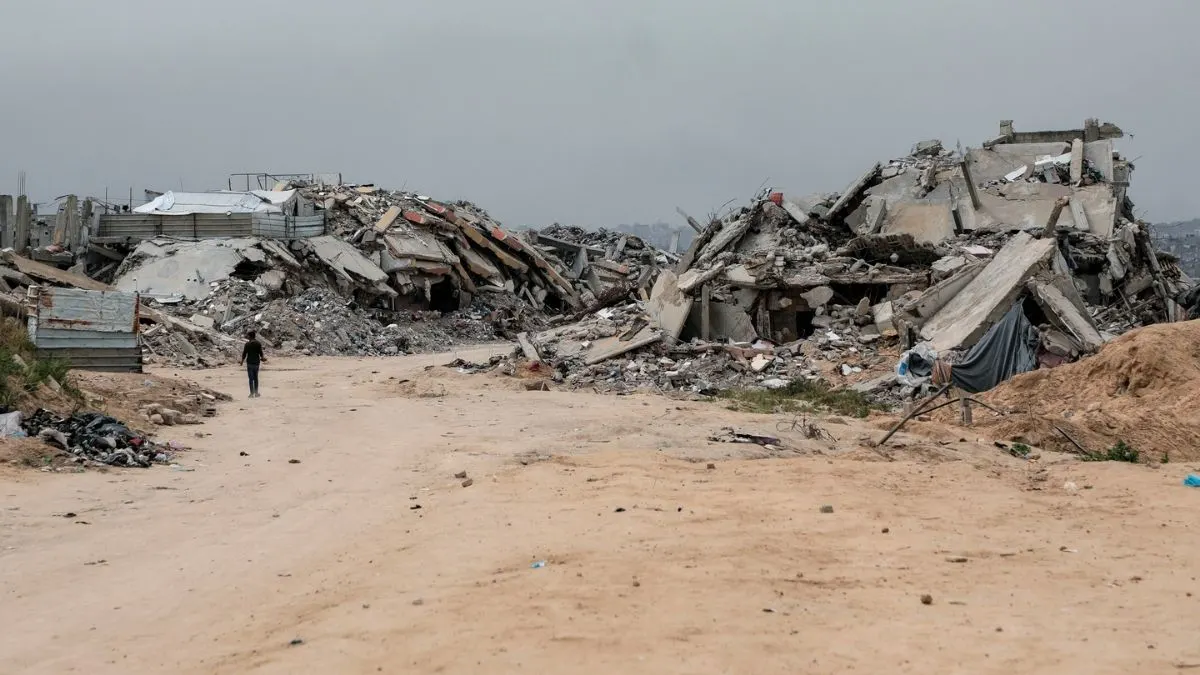
France recognized the State of Palestine at the United Nations General Assembly in September 2025. The recognition followed more than 55,000 documented Palestinian deaths in Israel’s ongoing genocide in Gaza at the time of recognition, formal ICJ proceedings, and sustained pressure from Muslim-majority states and the Global South.
France’s Other “Rules-Based Order”: Africa
Macron’s warning against “economic coercion” carries a particular charge alongside France’s structural relationships in Africa. Fourteen nations — among them Senegal, Mali, Niger, Burkina Faso, Ivory Coast, and Cameroon — remain tied to the CFA franc, a currency whose reserves are managed through France’s treasury. In 2019, former Italian Foreign Affairs Minister Luigi Di Maio stated publicly that France’s standing as a global economic power is directly connected to this monetary arrangement.
France’s decade-long military presence in the Sahel — launched as Operation Serval in Mali in 2013 — ended in sequential expulsions: Mali in 2022, Burkina Faso in 2022, Niger in 2023. In January 2025, Macron complained that Sahel governments had failed to “say thank you” for France’s military presence.
Togolese activist Farida Bemba Nabourema responded that the statement “reeks of revisionism and intellectual dishonesty” and reflects “the racism that justified colonization.” The governments of Mali, Burkina Faso, and Niger have since deepened security ties with Russia — precisely the actor Macron’s Friday speech implicitly designated as a source of “interference.”
The Record Behind Today’s Forum
Today’s Paris conference assembled Israeli and Palestinian civil society organizations, with France positioning itself as the diplomatic anchor of a renewed two-state framework. The ICJ has affirmed a Palestinian state as a matter of international legal obligation. Macron himself stated Friday that lasting regional stability is “impossible” without stabilizing Gaza — a position that contrasts with 32 months of documented institutional delay.
France’s own Defense Ministry records document €30 million in Israeli arms deliveries in 2023 alone. The Progressive International investigation documented a further $10 million in shipments through April 2025.
France’s recognition of Palestine arrived only after more than 55,000 documented Palestinian deaths in Gaza — a toll the Ministry of Health, as reported by OCHA, now places above 72,000, with peer-reviewed estimates from The Lancet exceeding 75,000. Sustained international isolation and civil society pressure had brought the matter to France’s own National Assembly.
Canada’s $100 million pledge at Friday’s forum represents the most concrete deliverable of the day. The two-state solution Macron now champions was, by his own admission, “more threatened than ever by irresponsible decisions” — before his podium was set up.