


Amnesty International says the West Bank’s colonist violence is not chaos. It is policy. A new report accuses the Israeli government of running a state-sponsored campaign of ethnic cleansing, built on testimony from 64 witnesses and more than 420 verified videos and images.
What the Report Documents
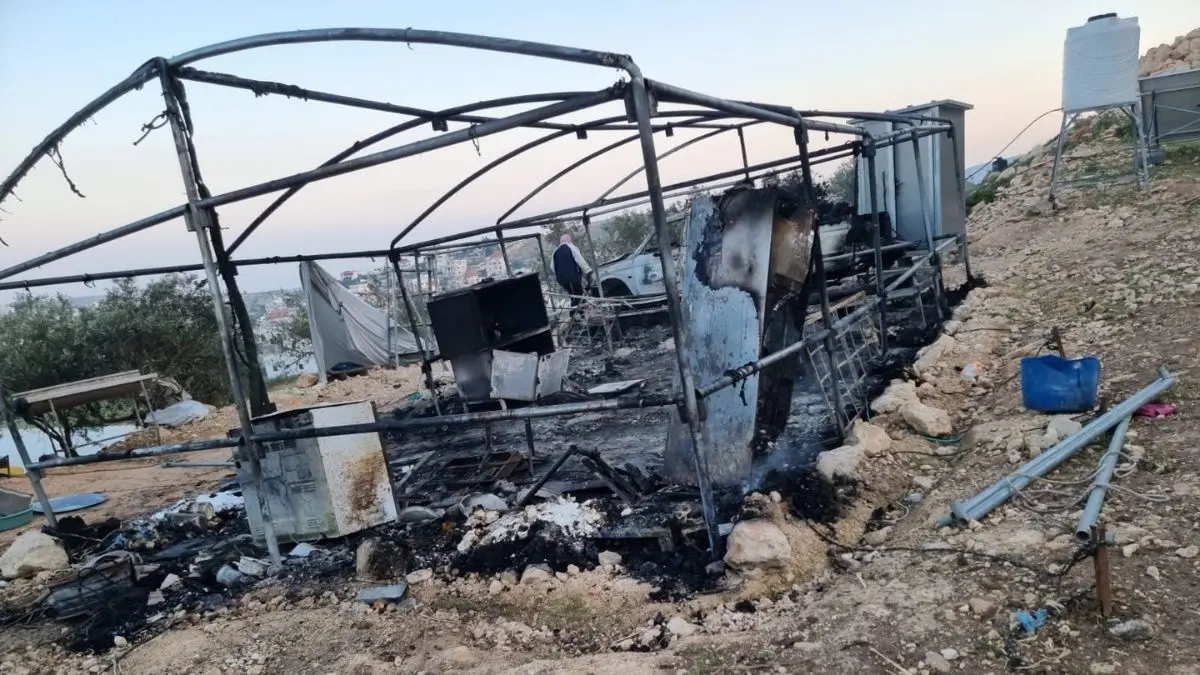
Published on 10 June 2026, the 149-page ethnic cleansing report examined 27 Bedouin and herding communities pushed out of Area C between 2023 and 2025. Area C is the 60 percent of the West Bank still under full Israeli military and administrative control since the 1995 Oslo II Accords.
Israel has a standard reply to findings like this. It has long dismissed such accusations as biased, and it did not respond to this report before publication. The government treats colonist attacks as isolated crimes, not a coordinated project. Amnesty built its report to test exactly that claim.
The Numbers Behind the Displacement
The scale undermines the isolated-incident defense. Since January 2023, 117 Bedouin communities have faced full or partial displacement, and roughly 5,910 people have been forced from their homes, according to UN tracking cited in the report. Most were pushed out of villages their families had lived in for generations.
Settlement expansion moves in step with the displacement curve. Israel established a record 86 new outposts in 2025 alone, 58 of them registered as “agricultural farms,” according to Israeli monitoring group Peace Now. Colonists use these farms to claim grazing land Palestinian shepherds have worked for decades, then escalate to harassment once the claim is contested.
The money backs up the pattern. Israel’s settlement ministry budget grew 122 percent in three years, reaching 764 million shekels in 2026. By February, authorities had already seized half of Area C’s unregistered land, which makes up 58 percent of the zone.
The Accountability Gap
The accountability record is the clearest evidence of state policy. In July 2025, colonist Yinon Levi shot and killed Palestinian activist Awdah Hathaleen in front of multiple cameras. Police held Levi less than a day, then released him to house arrest for three days. Prosecutors did not announce a reckless homicide indictment until seven months later, in February 2026, and no trial has been held since.
That delay is not unusual. Israeli rights group Yesh Din found that more than 90 percent of colonist violence cases filed between 2005 and 2025 ended without charges, and just 3 percent led to a conviction. A justice system built to produce those numbers is not failing to enforce the law. It is declining to.
The International Response
International bodies reached the same conclusion independently. Thirteen UN Special Rapporteurs said colonist attacks, carried out with state support, function as a tool of coercion that facilitates ethnic cleansing, according to their UN Special Rapporteurs statement. Canada, Britain, France, and Norway sanctioned Israeli networks financing colonist violence days later. Years into a documented campaign, a handful of asset freezes is the extent of the international response so far.
Nobody disputes that individual colonists are violent. What Amnesty’s report adds is proof that violence, land seizure, and impunity operate as one system, not three separate problems. A government that grew its settlement budget by 122 percent while its courts spent seven months not indicting a filmed killing owns the burden of explanation. The families burying their dead do not.