

A missile rose from the sea just after noon.
China called it training.
For several Pacific governments, the launch carried a colder meaning: great-power rivalry does not ask permission before entering smaller nations’ waters, airspace, trade routes or security calculations.
The People’s Liberation Army Navy said a strategic nuclear submarine launched a missile carrying a dummy warhead toward high seas in the Pacific at 12:01 p.m. on Monday. The missile landed in designated waters, and Beijing said the launch was part of annual training, complied with international law and had been notified to relevant countries in advance, according to Xinhua’s official account of the launch.
The explanation did not calm the region.
Reuters reported that the test drew concern from the United States, Japan, Australia, New Zealand and Taiwan. The issue was not only the missile itself, but also notice, transparency and the growing use of the Pacific as a theatre for military signaling, according to Reuters reporting on regional reaction.
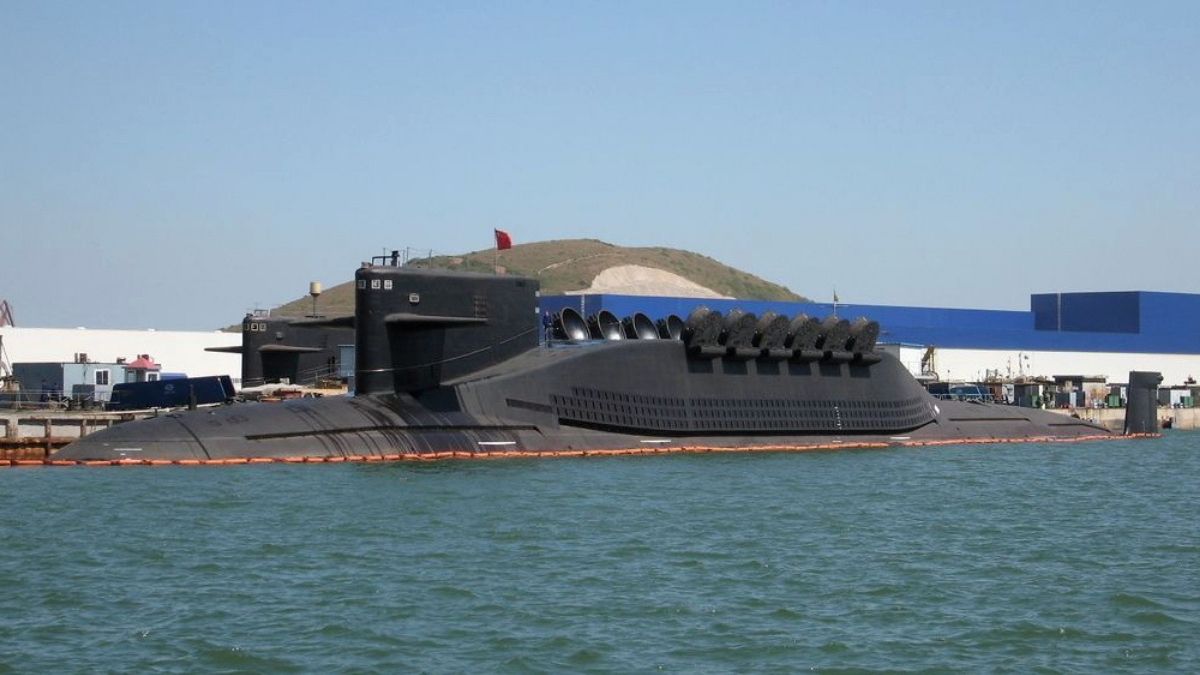
The missile type has not been officially confirmed. AP reported that analysts believed it may have been a JL-2 or JL-3 submarine-launched ballistic missile, while noting that available imagery was not clear enough for a firm identification. Both possibilities matter because the launch came from a nuclear-powered submarine, not a fixed land site.
In military terms, that is the point: a sea-based missile force is harder to track, harder to target and harder to ignore. SIPRI’s latest nuclear forces assessment says China has been refitting its Type 094 ballistic missile submarines with longer-range JL-3 missiles, while the Bulletin of the Atomic Scientists has also documented China’s effort to strengthen its sea-based nuclear force through the Type 094 and JL-3 combination.
But the hardware is only one layer of the story. The map beneath it matters more.
The South Pacific carries the memory of nuclear testing and the legal identity of a nuclear-free zone. The Treaty of Rarotonga established the South Pacific Nuclear Free Zone, and Pacific governments have long resisted being treated as empty strategic space. A dummy warhead does not erase that history. Nor does a statement that the launch was “not directed” at any country remove the anxiety caused when a nuclear-capable delivery system is fired into the region.
That is why New Zealand objected so sharply. AP reported that Wellington pointed to the South Pacific Nuclear Free Zone and said it had no interest in seeing the region used as a missile testing site. Australia also criticized the limited warning and called the launch destabilizing, while Japan lodged concern over China’s expanding military activity.
Solomon Islands Prime Minister Matthew Wale put the matter more plainly. Standing beside Australian Prime Minister Anthony Albanese, he said China remained a friend, but the launch was not the act of a friend. He warned that no country — China, America or anyone else — should be testing intercontinental missiles in the Pacific Islands region, according to Reuters coverage of the Australia-Solomon Islands response.
That sentence cuts through the diplomatic fog.
The Pacific is not a blank ocean around someone else’s contest. It is home to states that have already lived with the costs of distant powers treating their region as a proving ground. Beijing did not invent that habit. Western powers helped write much of its history.
That is exactly why the pattern is so dangerous when any major power repeats it under a new flag.
China’s argument will be that the United States and its allies have surrounded the region with bases, patrols, alliances and deterrence language of their own. That argument is real. It is not a defense. One militarized system does not become just because another militarized system came first.
The test leaves two audiences with two different calculations.
For Washington and its allies, Beijing is saying that its nuclear force is becoming more survivable and more mobile. For Pacific nations, the message is harsher: their region may again be used as the place where stronger states send warnings to each other.
One test does not mean war tomorrow. The danger is slower and more cumulative. Each launch, pact, patrol and protest makes the Pacific less like a shared region and more like a monitored battlespace.
Smaller states are then asked to accept risk they did not choose, while larger powers call it stability.
China wanted to show capability. The test showed that. It also showed why Pacific leaders are worried: in the language of nuclear signaling, even a dummy warhead can carry real political threat.