

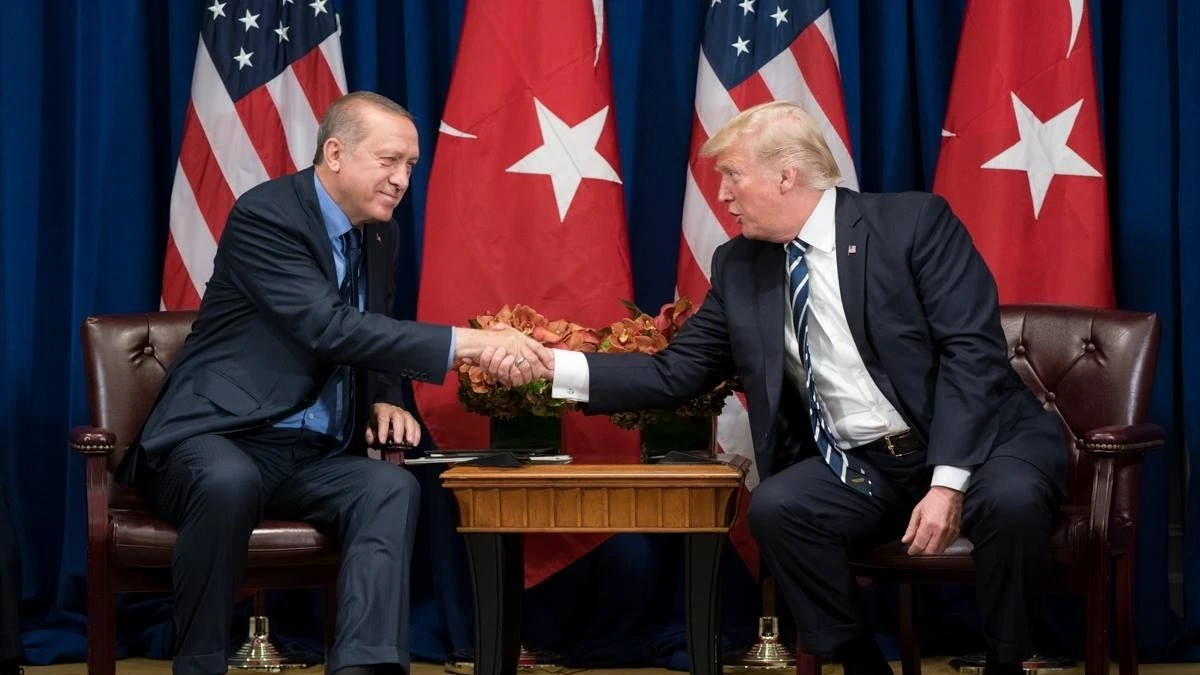
In Ankara, during a NATO summit hosted by Türkiye, President Donald Trump turned a six-year sanctions dispute into one public sentence.
“We’re going to be taking the sanctions off,” Trump told reporters when asked about measures imposed on Türkiye under the Countering America’s Adversaries Through Sanctions Act, according to Reuters reporting from Ankara.
Trump also said Washington would make a decision on a possible F-35 sale to Türkiye.
That second file is harder.
CAATSA is a sanctions question. The F-35 is a legal, congressional and regional power question. Treating them as one issue makes the headline easier, but it hides the real fight.
A sanction, not a settlement
The first Trump administration imposed the CAATSA sanctions in December 2020 after Türkiye purchased Russia’s S-400 air defense system. The measures targeted the Presidency of Defense Industries, known as SSB, along with several senior SSB officials.
They were not a blanket economic embargo on Türkiye. They were narrower, but strategically placed.
The Federal Register notice, published in April 2021 but effective from December 14, 2020, shows that Washington blocked specific U.S. export licenses and authorizations to SSB, restricted certain U.S. financial institution lending, opposed some international financial institution support that would benefit SSB and imposed blocking and visa restrictions on named Turkish defense officials.
Those credit and lending restrictions should not be treated as a neutral technical footnote. In the modern financial system, such channels often operate through interest-bearing leverage, and sanctions can turn that leverage into a tool of pressure against a state institution.
That is why the sanctions mattered beyond their legal form. They placed a U.S. warning label on a central Turkish defense institution.
For Ankara, the message was also instructive: a procurement decision could be turned into a long-term pressure tool, and dependence on external approval could become a strategic vulnerability.
The F-35 file is a different lock
Trump can announce a change in policy tone. He can direct his administration toward lifting CAATSA measures. But Türkiye’s path back to the F-35 program still runs into U.S. law.
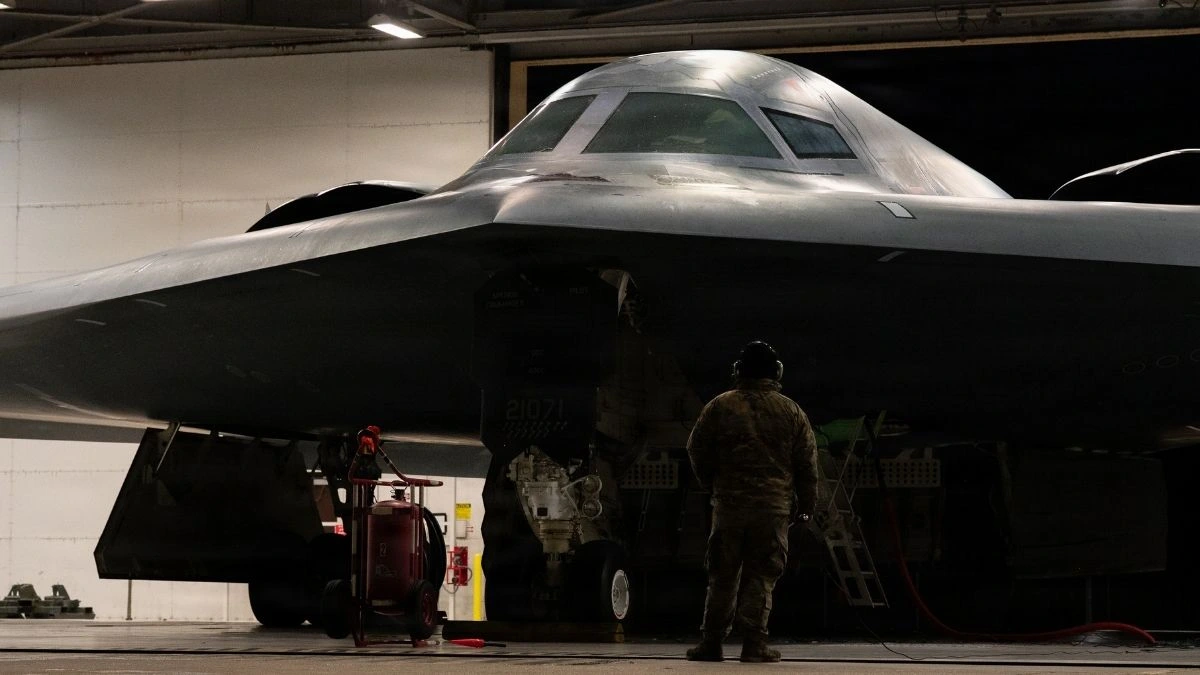
The key provision is Section 1245 of the FY2020 National Defense Authorization Act. It bars the transfer of F-35 aircraft, support equipment, parts, technical data and related support to Türkiye unless U.S. officials certify to Congress that Türkiye no longer possesses the S-400 system or associated equipment, materials or personnel.
The law also requires credible assurances that Türkiye will not accept the system again, according to the FY2020 NDAA text.
That is the center of the story.
If CAATSA is lifted, one lock may be removed. The F-35 gate remains in front of Congress.
This is why the Ankara statement should be read seriously, but not oversold. It is a real opening for Türkiye. It is not yet a delivery plan, a program return or a completed defense settlement.
The strongest U.S. argument
Washington’s strongest argument is not merely that Türkiye bought a Russian system.
The technical case is that the S-400, if operated near advanced NATO aircraft, could help Russian intelligence study how the F-35 is detected, tracked and exposed. Pentagon officials made that argument in 2019, saying Türkiye could not field what they described as a Russian intelligence collection platform near the F-35 program because the aircraft’s stealth capabilities had to be protected.
That is the serious version of the U.S. objection. It is also why Congress turned the dispute into law rather than leaving it only to diplomacy.
But a serious technical argument does not erase the political use of the file.
A real security concern became a long-term pressure mechanism. The F-35 question is now shaped not only by technology, but also by Congress, Israel’s preferred regional order and Washington’s willingness to keep Türkiye outside a high-end defense lane.
How Türkiye was pushed out
The rupture came in 2019, when Washington began removing Türkiye from the F-35 Joint Strike Fighter program after Ankara took delivery of the S-400.
At the time, Pentagon officials said Türkiye could not have both the Russian system and the F-35. The Defense Department said Turkish personnel would be reassigned away from the program and that Türkiye’s industrial role would be wound down, according to the Pentagon’s 2019 account.
The consequences were not symbolic.
Türkiye had planned to buy F-35 aircraft and had a production role in the wider program. The removal meant lost aircraft access, lost industrial work and a deeper rupture in defense trust.
It also accelerated a lesson Ankara had already begun to absorb: a state that cannot rely on stable access to allied systems has to widen its options and strengthen its own defense-industrial base.
That is why the CAATSA debate is larger than one American sanctions file. It sits inside a longer Turkish effort to reduce strategic dependency while still operating inside NATO’s security architecture.
Israel wants the gate kept shut
The F-35 question is not only about radar signatures or congressional procedure. It is also about regional hierarchy.
Israel has objected to any U.S. move that could bring Türkiye back toward the F-35. Israeli officials have framed the issue around the military balance in the Middle East and Israel’s air superiority.
Axios reported that Israeli Prime Minister Benjamin Netanyahu urged Trump not to sell weapons systems that would help modernize Türkiye’s air force, especially the F-35. Axios also reported that 18 U.S. lawmakers called for blocking any potential F-35 sale as long as Türkiye’s military still holds Russian-made S-400 systems.
That objection should be read plainly.
Israel is not a neutral observer in this file. It is a regional actor seeking to preserve its military advantage while Türkiye has become one of the sharper state critics of Israel’s genocidal war in Gaza.
That means Ankara faces two layers of resistance: formal U.S. law and political pressure from actors who do not want Türkiye’s airpower restored at that level.
What actually changed in Ankara
The immediate change is diplomatic.
Trump’s statement moved the CAATSA issue from frozen dispute to active negotiation. Türkiye can now press Washington to turn the public pledge into a formal step.
The second change is political.
For years, the CAATSA file allowed Washington to keep pressure on Türkiye while describing the matter as a technical defense-security problem. Ankara can now argue that the punishment phase has run its course and that defense relations should not remain trapped inside a single sanctions file.
The third change is strategic.
The F-35 debate will expose how much of Washington’s Türkiye policy is shaped by law, how much by institutional distrust and how much by Israel’s preferred military order in the region.
It will also test whether the U.S. is prepared to treat Türkiye as an allied power with its own security requirements, rather than as a state whose defense choices must remain subject to permanent external discipline.
The test comes after the headline
Trump’s sentence matters because it gives Türkiye a visible opening at a summit held on Turkish soil. It also puts pressure on the U.S. bureaucracy to explain what “taking the sanctions off” will mean in practice.
But the next steps will be measurable.
Will the sanctions on SSB be formally lifted? Will the administration submit any certification on the S-400 issue? Will Congress accept a pathway for Türkiye, or move to block it? Will Israel’s objections become a quiet veto through Washington’s political system?
Those questions now define the file.
For Türkiye, the gain is not yet an F-35. It is a restored negotiating position after years in which one procurement dispute was used to narrow Ankara’s defense options.
For Washington, the choice is no longer whether to keep repeating the old CAATSA line. Trump has already moved past that line in public.
The real question is whether the United States is prepared to move from a summit sentence to a policy that can survive its own laws, its Congress and the pressure campaign against Türkiye’s return to the F-35 track.