

Türkiye has a new roadmap for quantum technology inside its defense industry. The official running the program did not call it a research upgrade. He called it a test of independence.
At the launch event in Ankara on June 24, Haluk Görgün — head of Türkiye’s Defense Industries Secretariat (SSB) — told the audience that dependence on critical technologies is never just a matter of procurement. It is a matter of whether a country quietly loses control over its own future to someone else.
That single point is the story. The chips, the universities, the budgets — all of it exists to answer the question Görgün raised: who decides what Türkiye can build, and who decides what it cannot.
What was actually launched
The event brought together the Higher Education Council president, university rectors, and the heads of ASELSAN, HAVELSAN and ROKETSAN. TÜBİTAK officials and members of the Turkish Armed Forces also attended.
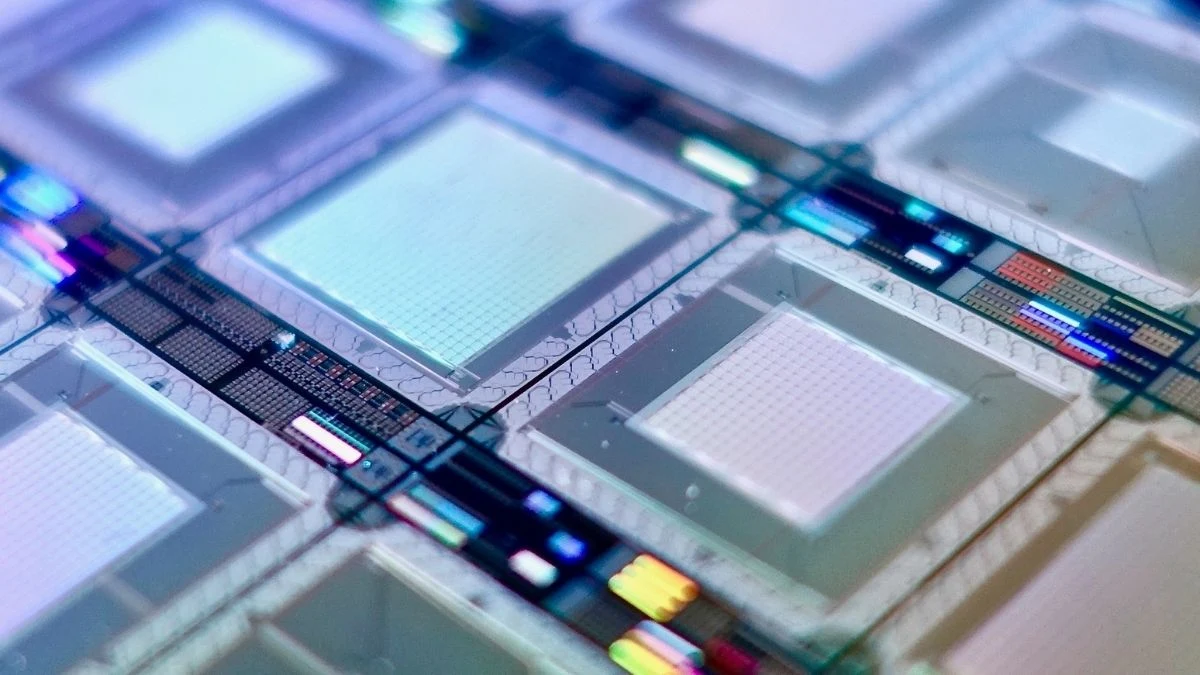
Four agreements were signed on the spot. A Superconducting Quantum Processor Unit project, led by ASELSAN with Koç University, Sabancı University and TÜBİTAK’s national metrology institute as partners. The KERTERİZ project on quantum magnetometers for submarine detection and navigation. A university cooperation protocol on quantum competence-building. And a national quantum algorithm competition.
None of this began this week. SSB opened a Quantum Technologies Development Program in 2020 and produced an initial roadmap.
A 2024–2025 update fed directly into this week’s strategy, alongside the newly launched Türkiye Quantum Platform — a coordination hub linking academic labs, defense primes and the state under one plan.
Eleven universities, among them Boğaziçi, Bilkent, METU, Istanbul Technical University and Sabancı, signed on to train the engineers this program assumes will exist. Görgün’s own numbers explain the urgency: the average age across Türkiye’s defense workforce is 34, two decades younger than its counterparts in developed countries, by his account.
The history behind a familiar argument
Görgün did not invent the link between dependency and control. Türkiye learned it the hard way.
During the 1964 Cyprus crisis, a sternly worded letter from US President Lyndon Johnson made clear that American-supplied weapons could not be used for operations Washington had not approved. Researchers later described this as Ankara’s total dependence on the US in defence.
A decade later, Washington embargoed arms after Türkiye’s 1974 Cyprus operation. The response was not negotiation. It was the founding of ASELSAN and what became Turkish Aerospace — a deliberate shift from importing capability to building it.
Four decades on, Washington restricted Ankara again. It ejected Türkiye from the F-35 program and sanctioned its procurement agency in 2019 and 2020, after Türkiye bought Russia’s S-400 system. Each episode taught the same lesson Görgün repeated this week: imported technology comes with someone else’s veto attached.
Where the numbers stand today
The record since 1974 backs the strategy. Domestic content in defense procurement has climbed from roughly 20 percent in 2002 to more than 80 percent today, by Turkish officials’ own count. Türkiye now ranks 11th globally in defense exports, Görgün said.
Quantum specifically is younger and less settled. ASELSAN and TOBB University of Economics and Technology unveiled Türkiye’s first domestic quantum computer, a five-qubit machine called QuanT, in November 2024 — two years after the partners opened a dedicated research lab. Its earliest chips were still prototyped outside the country.
Market analysts estimate Türkiye’s quantum-sensor sector remains roughly 80 percent dependent on imports from the US, Germany, Switzerland and Japan. The roadmap announced this week is an attempt to close that gap before it hardens into a new version of the same old dependency.
A race Türkiye did not start
Türkiye is not entering an empty field. Washington committed $2 billion to nine quantum firms through the CHIPS Act in May.
Beijing, meanwhile, has placed quantum technology first among the priority industries in its current five-year plan, backed by an estimated $15 to $16 billion in state funding. Export-control regimes built around that competition already restrict which quantum components Turkish firms and universities can buy — the exact dynamic SSB’s roadmap is designed to outlast.
Türkiye has been here before: denied a part by an ally, then forced to design it. What is different this time is that Ankara is naming the dependency before it locks in, not after.
Whether eleven universities, four signed protocols and a five-qubit prototype are enough to repeat the outcome of 1975 is a question the next decade — not this week’s signing ceremony — will answer.