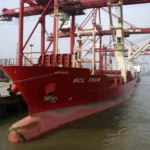


Twenty million barrels of oil and 20 percent of the world’s liquid natural gas (LNG) vanished from the global supply chain overnight. By May 2026, the devastating military strikes between the United States, Israel, and Iran have effectively locked down the Strait of Hormuz—the vital maritime artery of the global economy. As American gas prices surge past $4.55 per gallon and the specter of a historic global recession looms, Washington is rushing toward a diplomatic exit. The proposed peace agreement promises to stabilize the markets, but it brings forth a critical, unignorable question: Will reopening the strait rescue the teetering global economy, or will this rushed deal permanently hand the geopolitical keys of the Middle East to Tehran?
The Anatomy of a Forced Compromise
The urgency in Washington is palpable. US President Donald Trump recently announced that a comprehensive peace agreement with Iran is “largely negotiated.” This is not a standard diplomatic maneuvering process; it is an emergency intervention driven by economic necessity. The deal is being brokered heavily through the mediation of Qatar and General Asim Munir, the commander-in-chief of the Pakistan army. According to the US administration, the final parameters of a Memorandum of Understanding are currently on the table, awaiting final signatures.
The scope of the agreement is massive, pulling in a network of regional actors including the US, Iran, Israel, Saudi Arabia, the UAE, Qatar, Egypt, Jordan, and Bahrain. However, the proposed pact relies on a complex, highly volatile exchange of multi-layered concessions from both primary adversaries.
The American camp has laid out three specific primary demands. First, an official public declaration must be issued stating that the war has entirely ended. Second, a strict two-month intensive negotiation period regarding Iran’s uranium enrichment programs and Highly Enriched Uranium (HEU) stockpiles must begin immediately. Third, and most crucially for Western economies, free and unhindered navigation in the Strait of Hormuz must be restored without delay.
Tehran’s counter-proposal operates on an entirely different premise, showcasing a nation negotiating from a position of perceived strength. The Iranian leadership insists the war must end unconditionally on all fronts, explicitly extending the ceasefire to include Lebanon. Furthermore, Tehran demands that US forces must fully withdraw from the designated “war zone.” Economically, Iran requires the full release of all its frozen assets held in foreign banks and the immediate lifting of the US naval blockade on Iranian ports.
The Hormuz Sticking Point
The ultimate status of the Strait of Hormuz remains the single most critical and explosive negotiation topic. It is the literal bottleneck of global energy. The Fars News Agency, a prominent outlet known for its direct proximity to the Iranian administration and the Islamic Revolutionary Guard Corps (IRGC), has publicly clarified Tehran’s unyielding stance. They insist the strait must remain under direct Iranian control and administration in a formal capacity.
The message from Tehran is clear: if this specific demand regarding maritime administration is not met, negotiations will halt entirely. This firm attitude demonstrates a stark reality that Western strategists are struggling to digest. Iranian officials do not act as though they lost a war; they believe they hold the upper hand. The early stages of the conflict, heavily reliant on targeted airstrikes, did not trigger the internal public uprising that US and Israeli intelligence agencies had predicted.
Instead, the societal structure held firm, and Iran’s missile program has already entered an aggressive rebuilding phase. The regional proxy network, long the backbone of Iran’s forward defense strategy, remains intact. The regime’s material and logistical support for Hezbollah has continued without interruption, defying the intense pressure of the conflict. Iranian Foreign Minister Abbas Araghchi recently transmitted a definitive note to Hezbollah leadership, confirming that Iran’s support for the armed group will never cease. This unyielding posture severely complicates Washington’s efforts to secure a clean, marketable diplomatic victory for the American public.
A Fractured Washington
Back in the United States, this potential agreement has ignited severe internal political fractures. The Trump administration finds itself walking a tightrope, pushing rapidly for a diplomatic deal while simultaneously threatening to resume military force. White House officials recently described the chances of restarting military strikes as a “50-50” possibility, a statement that underscores the deep uncertainty within the administration itself.
The leaked drafts of the agreement have triggered intense backlash from hawkish political figures. Former Secretary of State Mike Pompeo has heavily criticized the parameters of the deal, arguing that it completely contradicts the “America First” vision. Pompeo publicly insists that the US should rely on sheer military force to open the strait, permanently block Iran’s financial access, and dismantle its military capacity entirely.
Other prominent figures within the Republican party share this fury. Senators Lindsey Graham and Roger Wicker argue that the proposed agreement will only embolden Iran and legitimize its regional actions. They stated explicitly that signing such a deal would render the entire military campaign useless. The internal crisis has reached a boiling point, prompting Vice President J.D. Vance and other top national security officials to hold emergency closed-door meetings at the White House. Meanwhile, US Secretary of State Marco Rubio has already urged NATO allies to prepare a “Plan B” in the highly likely event that these fragile peace talks collapse completely.
The Macroeconomic Shockwave
While politicians in Washington argue over diplomatic semantics, global commodity markets have entered a spiral of historic hyper-volatility. The blockade of the Strait of Hormuz has triggered an unprecedented supply shock in the global energy architecture. Blocking this vital artery did not just halt ships; it triggered a cascading collapse across global supply chains that rely on predictable energy costs.
Recent analyses from S&P Global Market Intelligence and UBS forecast devastating economic consequences that extend far beyond the immediate conflict zone. Financial analysts warn that resolving the logistics bottlenecks in the Middle East will be incredibly difficult. Even if a comprehensive peace pact is signed today, repairing damaged maritime infrastructure, securing shipping insurance rates, and rebuilding complex supply lines could take months, if not years.
S&P Global estimates that the Dated Brent crude oil price will remain entrenched well above $100 per barrel for the remainder of 2026. Furthermore, the annual baseline averages for both 2026 and 2027 are expected to be 60 to 100 percent higher than any pre-war estimates.
Stagflation and Idle Refineries
Under the current geopolitical conditions, the daily absence of 20 million barrels of oil has caused sudden, violent breaks in critical industrial supply chains. Additionally, there is a massive and growing risk of global refinery capacities remaining idle due to the lack of crude input. This idle capacity translates directly into soaring transportation, manufacturing, and logistics costs worldwide.
These massive price hikes increase operational costs in every single sector, from basic agricultural production processes to final consumer retail goods. This grim picture has completely derailed the global disinflation process that central banks spent the last three years trying to achieve. Policymakers are now trapped in a dangerous stagflation scenario, caught violently between sharp economic contraction and uncontrollably rising inflation.
For 2026, macroeconomic models indicate a serious risk that the global economy could contract by up to 0.4 percent. The Material Price Index (MPI) has already surged by an alarming 40 percent compared to the previous year. High energy prices are no longer a temporary spike; they are rapidly becoming a permanent economic reality.
In an “Extended Disruption” scenario, where negotiations fail and the strait remains contested, Brent crude prices could realistically reach $200 per barrel. Central banks are already being forced to delay planned interest rate cuts, a move that significantly deepens global recession fears and threatens to collapse overleveraged financial institutions.
A New Strategic Architecture
If the disruption in the Middle East extends, massive structural changes will be required across the globe. Asian and European countries will be forced to aggressively break their heavy hydrocarbon dependence. They must initiate massive, accelerated investments in alternative energy sources and rapid industrial electrification. Interestingly, this forced transition holds long-term strategic and financial advantages for US LNG exporters, who are positioned to fill the immediate energy void in Europe and parts of Asia.
Meanwhile, the geopolitical landscape is undergoing a massive, irreversible transformation. The rise of Pakistan as a central, effective regional diplomatic mediator is a striking development, signaling a shift away from traditional Western-led negotiation channels. If Washington successfully reduces its military footprint and eases sanctions, global energy markets may find short-term relief. This could slightly ease the intense inflationary pressures currently weighing down Western economies.
However, the long-term strategic cost of this relief is steep. The current deal leaves Iran with its nuclear infrastructure and enriched uranium stockpiles fully intact. It also returns billions of dollars in frozen funds directly to Tehran, providing the capital necessary to reinforce its regional networks.
Most crucially, if Iran maintains its claim of de facto administrative control over the Strait of Hormuz—and the international community tacitly accepts this to keep the oil flowing—the balance of power will fundamentally change. By holding the ultimate leverage over the world’s most vital economic chokepoint, Iran would alter the Middle Eastern power dynamics permanently in its favor, strictly limiting Western influence in the region for decades to come.