

The skies over Ukraine experienced an intense and coordinated saturation strike on the night of May 23, 2026. Russian Aerospace Forces deployed 690 aerial munitions, targeting civil administration buildings, airbases, and critical water infrastructure. The sheer volume of projectiles exposed a severe vulnerability in Eastern Europe’s defense architecture. The defense batteries protecting the capital are exhausted, and the interceptors required to stop incoming ballistics are currently deployed thousands of miles away.
Earlier in the month, a sudden diplomatic intervention yielded a three-day pause in fighting scheduled for May 9 to 11. Mediated by the United States, the arrangement included an ambitious plan to exchange 1,000 prisoners of war from each side. The groundwork was laid in Miami, where U.S. special envoy Steve Witkoff and Jared Kushner held secret discussions with Ukraine’s chief negotiator Rustem Umerov.
The timing coincided with Victory Day, heavily signaling a temporary halt to hostilities while placing immense political pressure on both factions. Ukrainian President Volodymyr Zelenskyy addressed the development pragmatically, issuing a decree that he “allowed” the Red Square parade to proceed untouched. This maneuver prioritized the lives of Ukrainian prisoners over symbolic strikes on Moscow’s celebration.
The pause lasted less than 48 hours. By May 10, artillery and drone exchanges resumed, with both factions accusing the other of immediate and blatant ceasefire violations. The Ukrainian administration reported that Russian forces made no attempt to observe the regime, continuing assault activities in key sectors.
The diplomatic breakdown revealed a structural reality regarding temporary halts in modern warfare. Factions engaged in prolonged conflicts treat these agreements as logistical windows to resupply lines and rotate depleted units rather than genuine steps toward resolution. The sudden transition back to full-scale kinetic activity highlights the total insolvency of institutional trust between the combatants.
The Kinetic Reality of the Oreshnik Deployment
The collapse of the ceasefire prompted an immediate escalation in tactical force across the entire theater. The May 23–24 attack utilized 600 drones, including Iranian-designed Shahed models, jet-powered Geran-3s, and Italmas systems. The primary objective of this massive swarm was not direct structural destruction.
The operation was designed to force the consumption of expensive Western interceptors and open corridors for heavy ballistics. Ukrainian defense batteries managed an impressive 91.5 percent interception rate against the unmanned systems. However, the 90 missiles that followed achieved a much higher penetration rate due to radar saturation.
The strike package included Iskander-M tactical ballistics, Kinzhal and Zircon hypersonic systems, and S-300 surface-to-surface variants. Intercept rates for tactical ballistic missiles fell to a concerning 36.7 percent under these conditions. The data demonstrates that defensive networks can be overwhelmed when subjected to multi-tiered, simultaneous vectors.
The most significant development of the night was the deployment of the Oreshnik intermediate-range ballistic missile (IRBM), which struck the city of Bila Tserkva near Kyiv. Visual intelligence confirms the weapon was equipped with a kinetic Multiple Independently Targetable Reentry Vehicle (MIRV) payload rather than conventional explosives.
It separated into six clusters upon atmospheric reentry, releasing 36 high-density kinetic rods designed to physically crush hardened decision-making centers through sheer mass and velocity. European diplomats and intelligence officers described the action as reckless nuclear brinkmanship intended to paralyze political maneuvering in Western capitals.
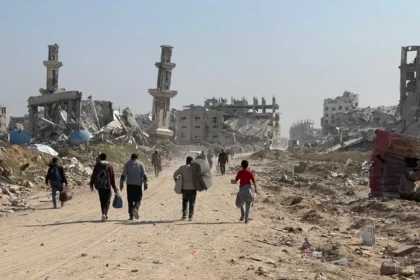
The structural damage across Ukraine was extensive and highly concentrated. Strikes hit the Ministry of Foreign Affairs, the National Art Museum, and a critical water supply facility in Kyiv. The residence of the Albanian Ambassador was also struck, an event the Albanian Foreign Minister condemned as a severe breach of international legal norms.
Ukraine responded with targeted drone strikes against oil refineries in Luhansk and the Borisovka region in Belgorod. Ukrainian forces also tightened fire control over the M14 and M18 highways to squeeze logistics lines into Crimea and Zaporizhzhia’s contested perimeter, while destroying a munitions depot in Mizhhirya.
Yet, the domestic political strain became visible within the Verkhovna Rada. Several Ukrainian parliamentarians made public calls for surrender following the devastation, forcing President Zelenskyy to hastily publish a video proving he had not been killed in a bunker strike.
A Supply Chain Diverted South
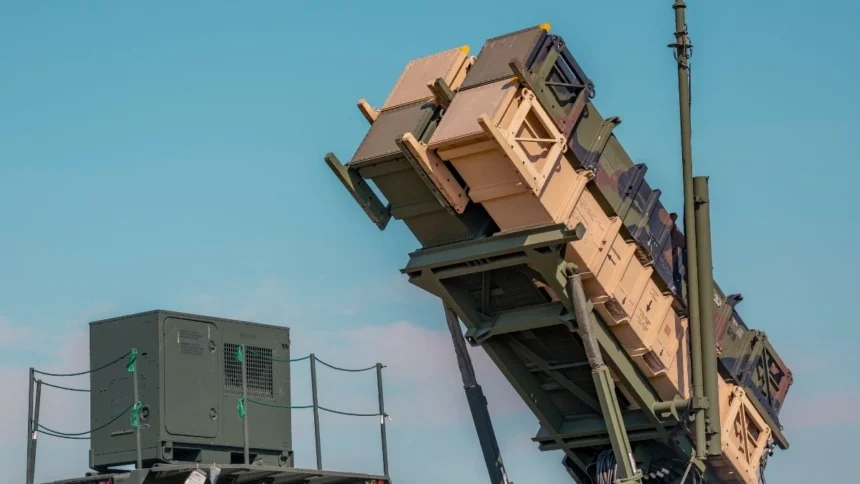
President Zelenskyy addressed the resulting deficit in defense capabilities through a direct letter to U.S. leadership. He stated clearly that Ukraine remains almost completely dependent on the United States for ballistic missile defense. His specific request for Patriot PAC-3 interceptors highlighted a severe exhaustion of their current stockpiles.
That figure deserves context. The lack of interceptors is not a financial oversight by allied nations, but a symptom of a severely strained global production base. The American defense apparatus shifted its priority in February 2026 following “Operation Epic Fury,” a massive military action directed at Iran.
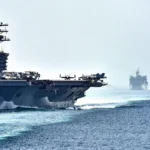
Retaliatory strikes on U.S. military bases in Bahrain, Qatar, Saudi Arabia, and the UAE demanded rapid deployments of Patriot and THAAD systems to the Middle East. Production lines for solid-fuel rocket motors and precision seekers cannot supply two major theaters simultaneously.
The U.S. administration prioritized the Middle East, leaving Eastern European defense grids vulnerable. Russian commanders tracked this diversion precisely. They calibrated their late-May saturation strikes to exploit the exact moment interceptor reserves ran dry, utilizing their vast ballistic inventory to alter the tactical balance.
The Romanian Border and Gray Zone Tactics
The boundaries of the battlefield are aggressively dissolving. On May 29, a Russian Geran-2 drone deviated from its trajectory during an operation over Odesa and entered Romanian airspace. The device struck an apartment block in the NATO-member city of Galați, injuring a 14-year-old child and a 53-year-old woman, triggering a localized evacuation of over 70 residents.
Romanian radar systems tracked the intrusion from the border, and two F-16 fighters were ordered to intercept. Military command stated the drone spent only four minutes over national territory. The pilots could not secure a safe engagement window without risking further civilian casualties on the ground.
The incident caused massive public outrage against the Romanian government, prompting the expulsion of the Russian Consul General from Constanța. The political fallout reveals how volatile border proximity remains during high-intensity aerial campaigns.
The drone strike functions as a visible fragment of a wider strategy of attrition. A heavily sanctioned “Shadow Fleet” operating in the Baltic and North Seas continues to execute sabotage against European infrastructure. Undersea fiber optic cables and power transmission lines have sustained damage from vessels turning off their transponders thousands of times to exploit maritime loopholes.
NATO’s current bureaucratic rules of engagement often fail to keep pace with these sub-threshold hybrid operations. The alliance exercises regional influence, but its deterrence mechanisms demonstrate profound gaps when confronted with asymmetrical threats.
The Architecture of Prolonged Conflict
Global prediction markets now price the probability of a permanent ceasefire by the end of 2026 at a mere 25.5 percent. While reducing the human toll of a prolonged conflict to a speculative betting instrument highlights a profound ethical decay, these platforms starkly reflect the cynical consensus of global capital. Early in May, speculative optimism pushed those odds drastically higher, but the swift return to kinetic operations corrected the market violently.
Ukraine faces profound demographic limitations. Nearly 40 percent of its working-age population is currently removed from the labor market due to displacement, migration, and military mobilization. Trust in the parliament has plummeted to 19 percent, reflecting deep societal fatigue.
Meanwhile, the Russian government maintains its military-industrial output by aggressively financing structural budget deficits. This economic engine relies entirely on interest-bearing debt structures and immense domestic borrowing. Wealth concentration and riba-dependent capital formation keep the defense sector artificially inflated, sustaining a war machine that operates independently of the broader civilian economy’s health.
Russian strategists prepare their public for a conflict lasting decades, framing the current operations through historical comparisons to the 21-year Great Northern War. The state machinery has fully adapted to sustained mobilization, rendering short-term economic sanctions ineffective at stopping kinetic deployments.
The conditions for a negotiated settlement require compromises neither faction is positioned to make. The Russian leadership demands the severe restriction of the Ukrainian military, outright bans on Western forces in the territory, and the reduction of peacekeepers to passive observers. Conversely, leadership in Kyiv refuses to accept terms that lack binding security guarantees, viewing the current territorial demands as an existential threat.
The deployment of kinetic MIRV payloads alongside expendable drones establishes the new operational standard for this decade. Conventional artillery parity and incremental territorial shifts are no longer the primary metrics of success. The victor in this geopolitical theater will simply be the last state left functioning when the other’s supply chains, demographics, and interceptor reserves finally break.