

Benjamin Netanyahu holds an active International Criminal Court arrest warrant for war crimes and crimes against humanity committed in Gaza. France — the host of this week’s G7 summit in Évian-les-Bains — is a party to the Rome Statute and carries a legal obligation to act on that warrant if he enters its territory. Netanyahu did not receive an invitation to the summit. He is also a man who cannot set foot in France without triggering a constitutional crisis for its government.
That is the structural context for everything that follows.
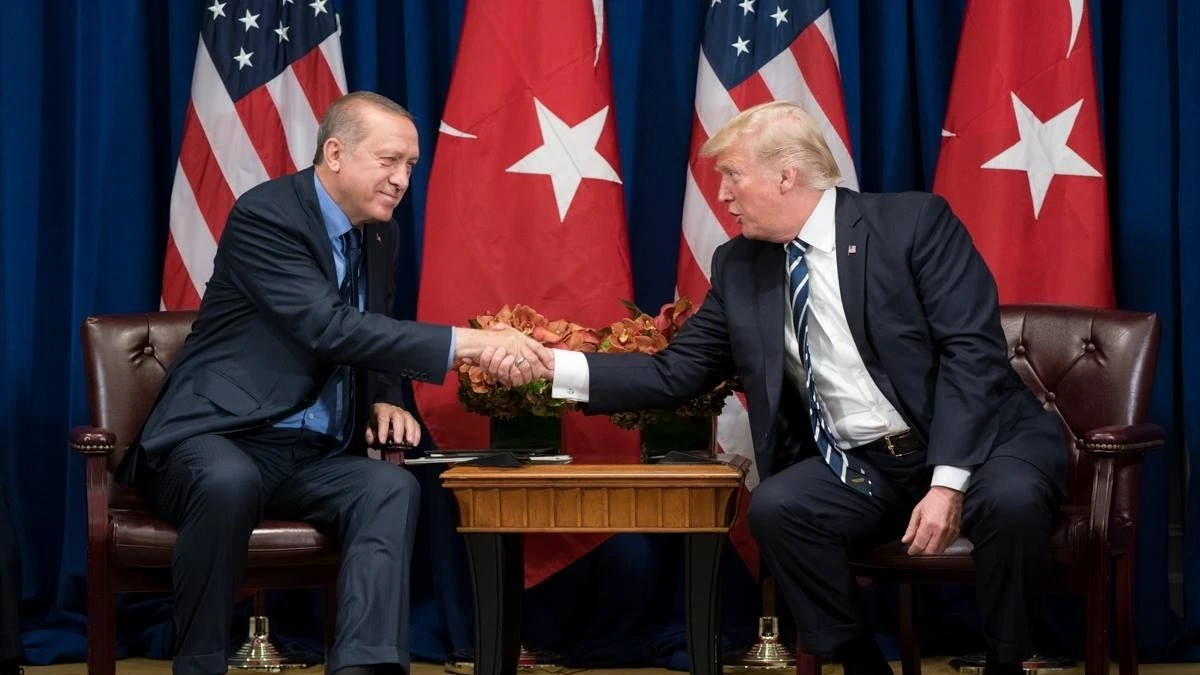
While the Israeli prime minister waits in Jerusalem, the leaders of Qatar, the United Arab Emirates, and Egypt will hold separate one-on-one meetings with Donald Trump on the sidelines of the G7 on Tuesday and Wednesday. Saudi Arabia has also been invited by French President Emmanuel Macron to a dedicated session on Iran and the Strait of Hormuz. Senior US administration officials confirmed these arrangements on Saturday.
The Deal That Was Not Signed on Sunday
Pakistani Prime Minister Shehbaz Sharif announced on June 12 that the United States and Iran had finalised the text of a peace agreement reached through months of Islamabad-brokered negotiations. He said electronic signing was expected within 24 hours, to be followed by technical-level talks the following week. Iran’s Foreign Ministry spokesperson Esmaeil Baghaei said hours later that Sunday’s signing would not happen, but that the agreement could be formalised “in the coming days.”
Saudi Arabia has offered to host the electronic signing ceremony once both sides confirm their readiness. Trump said publicly that the US had “just made a great settlement of the war with Iran,” subject to finalisation of documents. A senior US administration official described the emerging agreement as “strong” and said it would lead to the dismantling of Iran’s nuclear programme, including the transfer of enriched uranium to the United States for destruction.
Three parties have described the same prospective document in incompatible terms. Iran’s parliamentary national security committee chair, Amirhossein Azizi, said Washington had not been truthful in the negotiations and that Tehran views the talks as “a continuation of the battlefield.” Israeli opposition leader Yair Lapid said the agreement “doesn’t achieve any of Israel’s war goals.” Which characterisation reflects the actual text is a question the public cannot answer until the document is released.
What the Strait of Hormuz Actually Represents
Before the conflict began, the Strait of Hormuz carried approximately 25 percent of global seaborne oil trade and 20 percent of the world’s liquefied natural gas. The strait is 34 kilometres wide at its narrowest point, with two navigable shipping lanes each two miles across. When US and Israeli military operations against Iran began on 28 February, Iran’s response closed those lanes to normal commercial traffic through mining, boarding operations, and IRGC warnings forbidding passage.
Oil prices spiked. Shipping firms suspended operations. Supply chains that had depended on that passage for decades rerouted around the Arabian Peninsula at costs measured in billions. Iran’s civilian population paid a separate price: inflation reached 77.2 percent year-on-year by May 2026, the highest rate recorded since World War II, according to Iran’s own Central Bank.
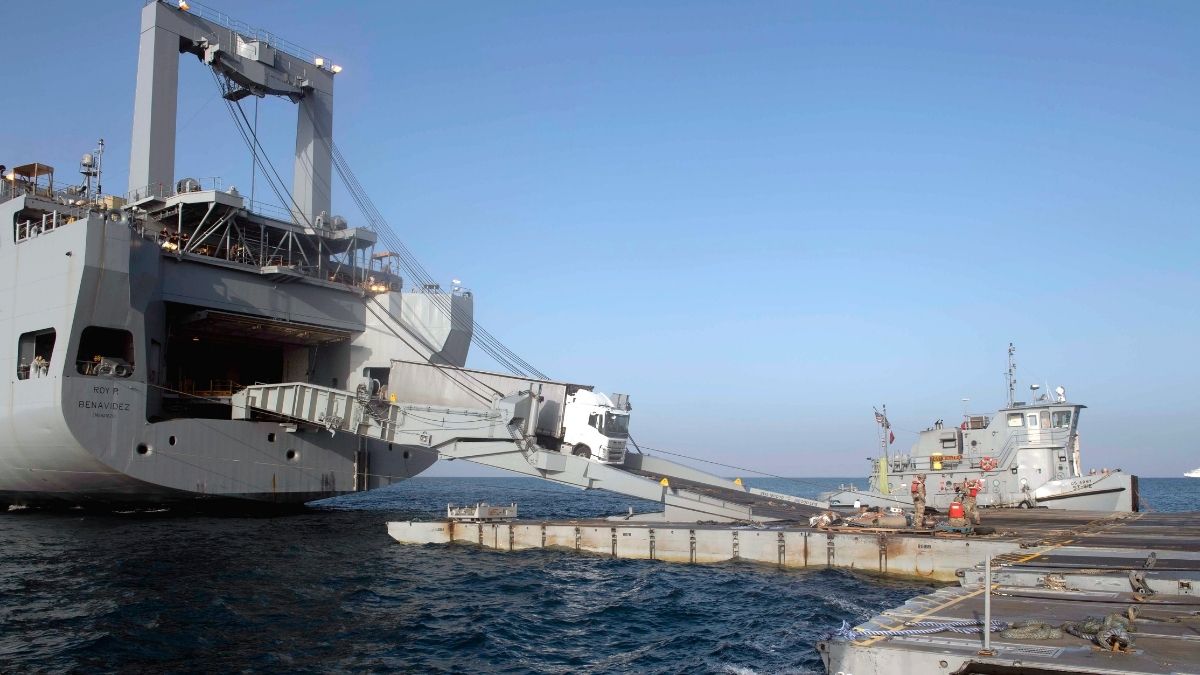
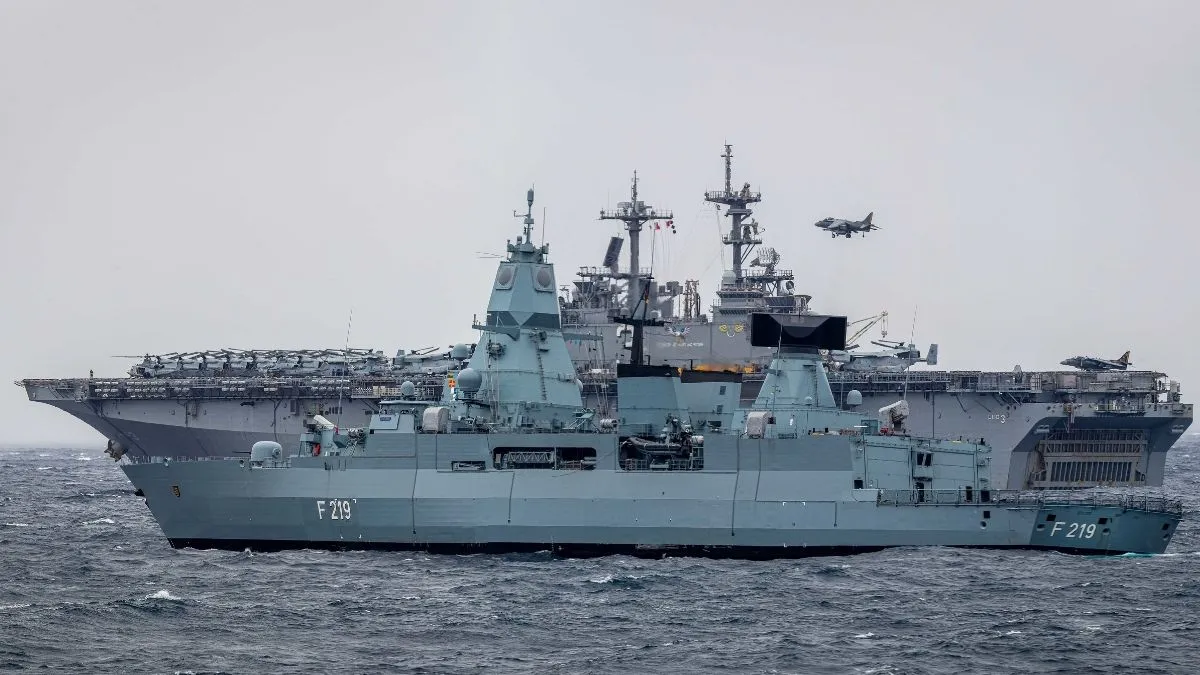
The UAE’s state energy sector has estimated that full commercial flows through the Strait will not resume until 2027, even if a deal is reached in the coming days. Britain and France have both expressed interest in demining assistance and have military vessels already at sea that could participate. The contested questions — who leads the demining process, under what legal framework, verified by whom — are precisely what Tuesday’s and Wednesday’s bilateral meetings will attempt to resolve.
How Qatar, the UAE, Egypt — and Now Saudi Arabia — Got Into This Room
These four governments were not invited to a G7 sideline as a diplomatic courtesy. They are in Évian because, collectively, they hold the necessary communication lines to the relevant parties: Qatar and Egypt to the Palestinian resistance leadership (Hamas), while the UAE and Saudi Arabia provide commercial leverage between Washington and Tehran.
Qatar opened its doors to the Palestinian political leadership living in exile — a decision no other Arab government was willing to make openly — and in doing so transformed Doha into the world’s most consequential diplomatic address. Qatar also emerged as the critical broker in negotiations over more than $100 billion in Iranian state assets held in overseas accounts blocked by US-led sanctions, a figure that sits at the core of what Iran expects from any agreement. Qatar’s prime minister explicitly acknowledged the role of Pakistani mediation and Qatari diplomatic engagement in sustaining the ceasefire and protecting navigation rights in the Strait.
Egypt hosted a series of negotiations aimed at bridging remaining differences that paved the way for the Gaza ceasefire, and presented its own counter-proposal at the Arab Summit to the US plan for displacing Palestinians from their land. The UAE, struck directly by Iranian forces in May during a breakdown in ceasefire arrangements, carries a direct material stake in what the Hormuz settlement ultimately looks like. Saudi Arabia’s offer to host the electronic signing is not a ceremonial gesture: it reflects Riyadh’s insistence that the Gulf’s economic architecture cannot be reconstructed around it without its participation.
The Host Who Cannot Name His Own Contradiction
Emmanuel Macron will chair this summit as France’s president for the last time. He has positioned France — and himself — as architects of regional stability. The documented record invites a different reading.
When the ICC issued an arrest warrant for Russian President Vladimir Putin in March 2023, France’s foreign ministry issued a statement declaring that “no one, regardless of their status, should escape justice.” When the ICC issued an arrest warrant for Benjamin Netanyahu in November 2024, France argued that the Israeli prime minister carried immunity derived from Israeli non-membership in the court — a position that international law scholars at Middlesex University and elsewhere have described as directly contradicted by the Rome Statute France itself ratified. The court’s own 2019 ruling on Sudan’s Omar al-Bashir had already resolved that question.
In July 2025, France granted permission for Netanyahu’s plane to transit French airspace, a decision that drew a formal complaint from a UN Special Rapporteur, who described it as a “serious violation” of France’s international commitments. In November 2025, six months after Macron publicly declared Netanyahu’s Gaza policy “unacceptable” and “shameful,” French authorities permitted Israeli arms manufacturers to exhibit at the Milipol security trade fair in Paris. No diplomatic mechanism to render account for those decisions exists in the G7 format.
Macron will dine with Trump at the Palace of Versailles on Wednesday evening after the summit closes. Netanyahu is in Jerusalem.
The Question Nobody at Évian Will Raise
Gaza’s second phase — the phase that was supposed to address long-term governance, reconstruction, and a verified pathway toward Palestinian sovereignty — has stalled entirely. Netanyahu told Washington before the summit that phase two “is not moving,” citing unresolved disputes over disarmament, governance arrangements, and security responsibilities. The summit agenda will not record that fact.
The $100 billion-plus in Iranian assets frozen by the US-led sanctions architecture is wealth Iran has consistently described as collective punishment — held without due process, and released, according to Washington’s stated position, only after a deal is formally signed, not before or alongside it. That sequencing has been a persistent sticking point throughout negotiations and reflects a fundamental asymmetry in who is asked to assume risk first.
The Arab mediators whose presence at Évian carries real diplomatic weight built that weight on the Gaza file. Qatar’s indispensability rests on its role as the only address through which Palestinian political representation could be reached. If the Iran deal closes while Gaza’s two million people remain under siege, without accountability for the conduct of the war, and without a verified path toward self-determination, then the leverage that built this diplomatic position will have been converted into an outcome that does not serve the population whose cause made that leverage possible. That moral accounting will not appear on the Évian agenda. It will, however, shape everything that comes after.
What Évian Confirms
The G7 was built for the economies that defined the post-Cold War Western order. Its formal sessions run through artificial intelligence governance, mineral supply chains, and trade architecture. Inviting the leaders of Qatar, UAE, Egypt, and Saudi Arabia to its sidelines changes none of that institutional structure.
What this week’s bilateral meetings do confirm is that those four governments have become indispensable to the one regional outcome Washington currently considers most urgent. Whether that indispensability translates into durable influence over the post-war Middle East — including on Gaza — or functions as a service arrangement that expires once the Hormuz crisis is managed, is a question the Évian meetings cannot answer.
The summit opens tomorrow. Netanyahu is in Jerusalem.