

The first major atmospheric anomaly of 2026 has exposed the stark limits of human engineering across the European continent. A massive high-pressure system anchored itself over Western and Southern Europe this May, dragging North African air masses into a region historically designed to trap heat rather than repel it. By the time the atmospheric system began to drift, 24 people were confirmed dead, and several of the world’s most advanced economies were grappling with dry taps and warped steel. This was not a mere seasonal shift; it was a profound collision between a warming atmosphere and an immobile, poorly maintained urban landscape.
The Mechanism Behind the May Anomaly
Meteorological data confirms the event was driven by a powerful anticyclonic anomaly that acted as a thermal lid, trapping extreme heat at the surface. This heat dome phenomenon suppressed cloud formation and vertical mixing, allowing uninterrupted solar radiation to bake the soil. Analysis by ClimaMeter indicates these conditions were 2.5°C warmer than pre-industrial averages for the same period. While institutional reports label this an anomaly, the precision of the system’s operation highlights a broader order in the natural world that human planning failed to anticipate.
While the heat itself was the primary driver, the periphery of the dome produced secondary extreme weather events. The interaction between the stagnant hot air and localized cold fronts generated severe downpours and rare roll cloud formations across Central Europe. These rapid atmospheric shifts triggered widespread panic, as the transition from spring to mid-summer conditions occurred in a matter of days rather than months, catching municipal authorities entirely unprepared.
A Continent Breaking Under Record Stress
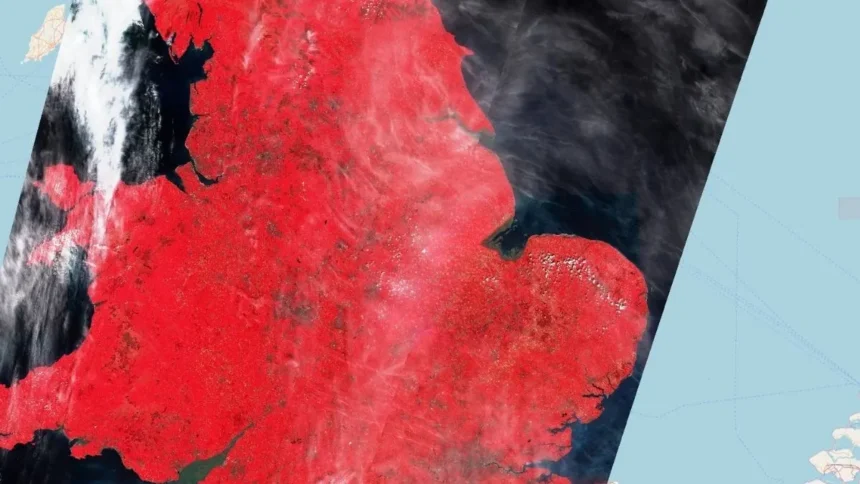
The geographic scale of the records shattered during this window suggests a permanent shift in European climatology, rendering older structural assumptions obsolete. Temperatures reached 40.3°C in Mora, Portugal, while Berlin saw thermometers hit the 40.0°C mark, effectively paralyzing the German capital. In France, the national temperature index reached a historic May peak of 24.9°C, while London recorded its warmest May day in nearly a century at 35.1°C.
| Country | Location | Recorded Value | Historical Context |
|---|---|---|---|
| Portugal | Mora | 40.3°C | Surpasses 2001 record |
| UK | Kew Gardens | 35.1°C | Warmest May day in a century |
| Austria | Lienz | 32.7°C | 200-year observational record |
| Netherlands | Ell | 30.7°C | Exceeds 2005 benchmark |
Even traditionally cooler regions were not spared from this atmospheric distribution. Ireland witnessed temperatures five standard deviations above the seasonal norm, while Swiss stations recorded the fourth-hottest May since systematic data collection began in 1864.
The Dual Crisis: Hyperthermia and the Cold Water Trap
The human toll of the 2026 heatwave followed two distinct paths, both revealing how quickly human vulnerability surfaces when natural balances shift. In Continental Europe, deaths were primarily linked to direct heat exposure and the fires it fueled. In Spain, four fatalities were recorded, including two individuals who perished in wildfires in Catalonia. Italy reported five deaths, including elderly citizens in Sardinia and a 53-year-old woman in Palermo who collapsed due to the sudden thermal load.
However, a more deceptive crisis emerged in the United Kingdom, driven by a lack of public awareness and inadequate seasonal safety protocols. As air temperatures neared 35°C, thousands sought relief in open water sources. Because the lakes and rivers were still retaining winter’s chill, swimmers experienced immediate “cold-water shock”. This physiological reflex causes involuntary gasping and rapid heart rate, leading many to inhale water and drown within seconds. The UK death toll from these incidents reached at least 13, with victims as young as 12 years old.
The Infrastructure Deficit and Cooling Gap
Europe’s built environment, long celebrated as a model of development, proved to be a severe liability under these conditions. Unlike the United States, where 90% of households utilize cooling systems, the European average is just 19%. Most European homes were engineered exclusively to retain heat, turning apartments into thermal traps during prolonged atmospheric stagnation—a clear consequence of design choices that ignored long-term climate vulnerabilities.
The failure extended rapidly across critical utility networks:
- Water Scarcity: In Kent, UK, 18,000 homes lost water access as demand overwhelmed pump stations and dropped network pressure, exposing a lack of systemic resilience.
- Transport Collapse: Historic metro lines like the London Underground saw internal temperatures hit 34.3°C, while rail operators were forced to implement speed restrictions to prevent steel tracks from buckling under the thermal load.
- Agricultural Stress: The heat hit during the sensitive heading stage of cereal development. Young plants with shallow roots faced acute hydric stress, threatening yields across the continent’s key agricultural zones.
The Silent Collapse of Aquatic Ecosystems
Beyond the visible fires in Crete and Edinburgh, a more permanent disruption occurred within Europe’s freshwater systems, demonstrating how human-induced climate stress destabilizes natural filtration mechanisms. The extreme surface heating disrupted the traditional lake mixing regime. By shortening the vertical mixing period by an average of 27 days, the heat prevented the natural filtration of nitrogen.
This imbalance triggered rapid cyanobacteria (blue-green algae) blooms, which deplete dissolved oxygen and release toxins. These events represent a severe disruption of the delicate thermal regime that supports European biodiversity, turning recreational waters into toxic hazards and revealing the interconnected penalties of ecological neglect.
Economic Realities and the Limits of Adaptation
The 2026 heatwave serves as a clear signal of deepening economic and structural vulnerability. Allianz Research suggests that recurring heatwaves could deplete the German economy by €112 billion by 2030. This figure accounts for lost labor productivity and the rising costs of energy as the continent attempts to close its cooling gap through resource-heavy infrastructure.
Adjusting to this reality requires a reassessment of seasonal safety protocols. Lifeguard services, traditionally confined to the summer months, are increasingly needed by early May to account for the thinning margins of the seasons. Urban planning strategies are also tilting toward passive cooling—utilizing reflective surfaces and green roofs—to mitigate the heat retention embedded in dense metropolises.
Yet, these adjustments address only the symptoms of a more fundamental disconnect. As European states attempt to manage their resources within these shifting geographic limits, a deeper tension remains unresolved. If the foundation of our urban life is built on an attempt to master, rather than inhabit, the rhythms of a world established by its Author, can we truly expect our structures to hold when those rhythms return with such inescapable force?