

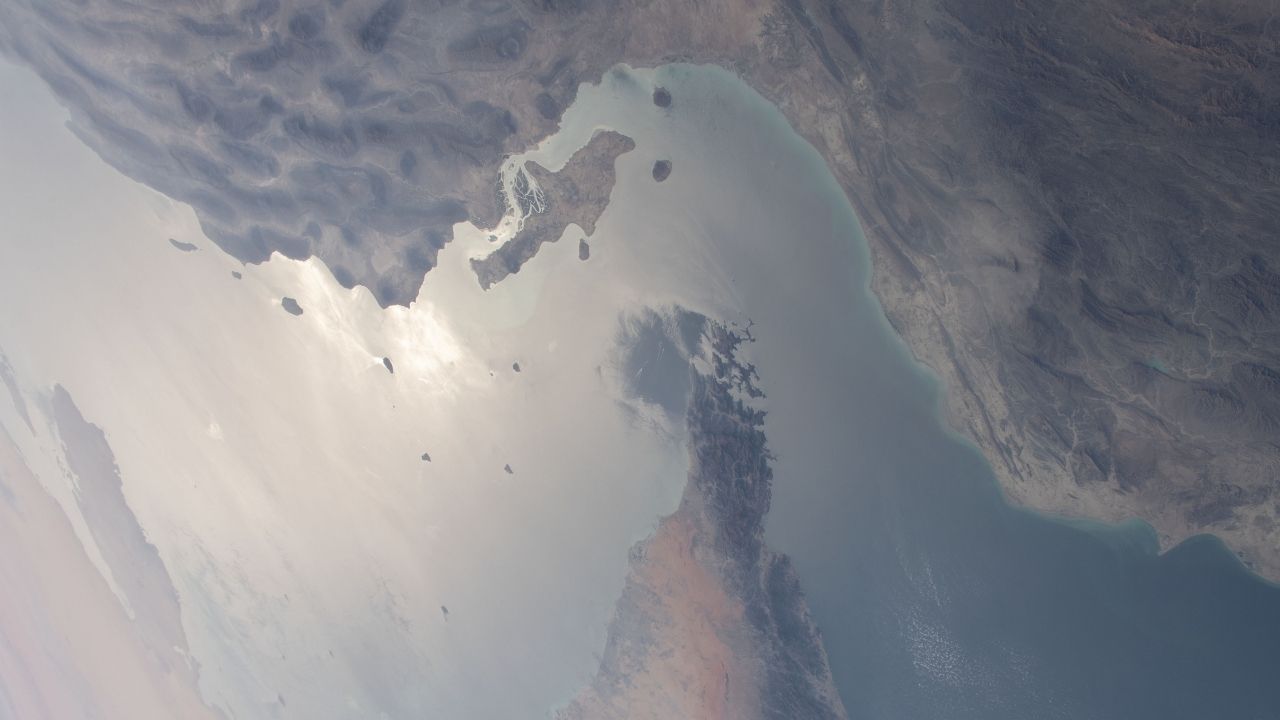
At the start of Thursday, ship-tracking analysts could see only two tankers moving through the Strait of Hormuz.
One was the Berg 1, a crude supertanker that had loaded at Iran’s Kharg Island. The other was the chemical tanker Well Sail, previously tracked near the United Arab Emirates.
More movements appeared as the day continued. By Thursday’s close, Kpler had counted 10 oil and LNG tankers through the waterway—down from 22 on Monday and the lowest daily total since June 28.
Even that was not a complete picture. Some vessels were travelling with their public tracking systems switched off, making traffic harder to count and risk harder for operators to assess. Reuters’ updated shipping data showed that the strait had not fully closed, but its recovery had sharply slowed.
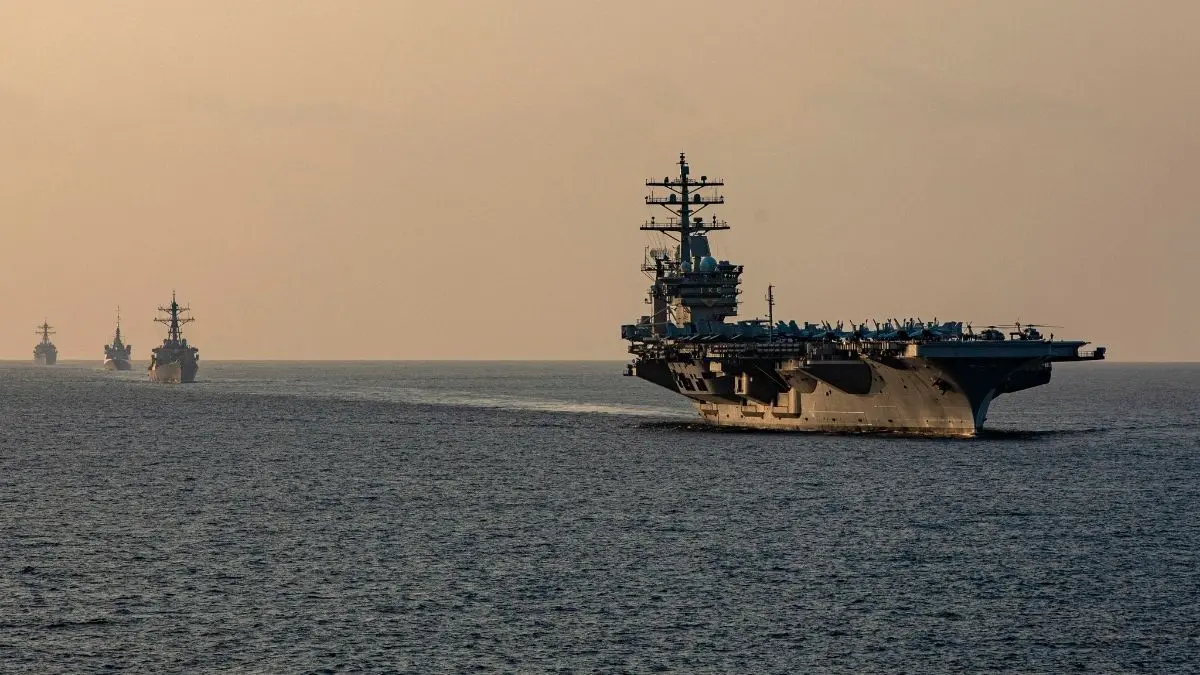
The slowdown followed renewed US airstrikes on Iran and Iranian attacks on American military infrastructure in Gulf states. The latest escalation began after attacks on three commercial vessels that Washington blamed on Tehran.
The wider war began on February 28 with US and Israeli strikes on Iran. The latest exchange has placed a three-week truce under severe pressure, as Criterion Post reported in its coverage of the renewed strikes and Iranian retaliation across the Gulf.
Oil markets reacted immediately. By Friday afternoon, Brent was heading for a weekly rise of about 5.1 percent, while West Texas Intermediate was up roughly 3.8 percent for the week.
Daily prices eased as traders placed their hopes on further negotiations. The physical risk had not disappeared: ships were still moving in reduced numbers, insurers were reassessing voyages and the ceasefire supporting the recent recovery was under strain.
The latest oil-market figures reflected both realities—hope of de-escalation and fear of another supply interruption.
A recovery built on moving ships
The timing matters because the global oil system had only begun to recover from the first Hormuz disruption.
According to the International Energy Agency’s July Oil Market Report, world oil supply rose by 4.1 million barrels a day in June, reaching 98.8 million barrels a day. The rebound was driven largely by the partial return of tanker movements and Gulf production.
Global output nevertheless remained 9.4 million barrels a day below its pre-war level. The IEA’s forecast for a large supply increase in 2027 depends on shipping through Hormuz continuing to improve. Renewed fighting could overturn that outlook.
Gulf oil exports climbed to 16.1 million barrels a day in June. Before the war, they averaged about 24 million.
Crude oil recovered faster than the fuels used directly by households and businesses. Gulf exports of refined products and liquefied petroleum gas remained below half their pre-war level, while petrol and diesel markets stayed tight. Refining margins reached four-year highs in early July.
That gap explains why a calmer crude-oil chart does not automatically mean cheaper transport, cooking fuel or goods deliveries.
There is no easy detour around Hormuz
Before the war, around 20 million barrels of petroleum liquids passed through Hormuz each day. That was equal to roughly one-fifth of global petroleum consumption and more than one-quarter of the world’s seaborne oil trade.
About one-fifth of global LNG trade also used the strait, largely because of exports from Qatar.
Saudi Arabia and the UAE have pipelines that bypass the waterway. Their estimated spare bypass capacity before the disruption was only about 2.6 million barrels a day—a small alternative beside the volumes normally carried through Hormuz.
The geographical exposure is also uneven. The US Energy Information Administration’s chokepoint data shows that 84 percent of the crude oil and condensate and 83 percent of the LNG passing through Hormuz in 2024 went to Asian markets.
China, India, Japan and South Korea were the largest destinations. This does not mean the shock stops in Asia. Refining, freight and fuel markets transmit the cost through global supply chains.
Why the first shock did not break the market
There is a serious argument against treating every slowdown in Hormuz as an immediate global collapse.
The world entered the war with oil inventories, emergency government stocks and some unused production outside the Gulf. Saudi Arabia and the UAE increased pipeline use. Exporters elsewhere sent more crude towards Asian markets. Higher prices and shortages also reduced demand.
Those measures kept oil moving.
They were not cost-free. OECD inventories fell by another 62 million barrels in June, with an estimated 44 million barrels supplied through government stock releases. Refined-fuel production remained far weaker than crude supply, and part of the apparent market balance came from consumers travelling, producing or buying less.
The first crisis therefore showed resilience, but it also consumed part of the protection available for the next one.
Where the higher cost lands
Rich importing states can release reserves, temporarily support households and borrow in their own currencies. Poorer importers have fewer ways to absorb the same shock.
UN Trade and Development examined 75 least-developed and small-island economies. Sixty-five were net oil importers. Together, they were home to almost one billion people, with more than 30 percent of their population living on less than $3 a day.
A sustained 50 percent increase in refined-fuel prices could add more than $20 billion a year to their combined oil-import bill, according to the UNCTAD assessment of vulnerable economies.
The additional cost could equal 7.3 percent of Mauritania’s gross domestic product, 6.3 percent of the Gambia’s and 5.2 percent of the Maldives’.
Those percentages do not remain inside an energy ministry’s spreadsheet. They narrow the money available for food imports, health services, transport, power generation and public infrastructure.
Governments already constrained by costly debt face particularly damaging choices. They can reduce essential spending, allow transport and food costs to reach households, or rely more heavily on interest-bearing borrowing.
In each case, people far from the battlefield carry part of the burden.
When a fuel shock becomes an interest burden
Interest-bearing borrowing is often presented as a technical answer to an urgent shortage: a government lacks foreign currency, import costs have risen, and lenders provide the funds needed to keep fuel and essential goods moving.
The arrangement is not neutral.
Under an interest-based loan, repayment includes both the amount borrowed and an additional return stipulated for the lender because time has passed. That return is written into the contract, while the borrower continues to bear the wider economic risks—currency depreciation, falling tax revenues, rising import prices and further political shocks.
Islamic teaching prohibits riba, and interest charged on loans falls squarely within that prohibition. This is not merely a private rule of worship. It addresses an economic relationship in which lending money becomes a contractually stipulated source of increase, detached from productive work and genuine responsibility for the transaction being financed.
The consequences become clearer during emergencies.
Sri Lanka’s 2022 collapse had many causes: sweeping tax cuts, years of fiscal weakness, lost tourism and remittance income, policy failures and external shocks. But the country also entered the emergency carrying an unsustainable foreign-currency debt burden.
As reserves disappeared, the government suspended external debt payments. Debt service was competing for the same scarce dollars needed to import fuel, medicine and other essentials.
Petrol queues stretched for kilometres. According to the World Health Organization’s account of the health emergency, shortages forced hospitals to postpone routine operations, procedures and laboratory services.
Borrowing had bought time. By 2022, the debt burden was narrowing the country’s ability to purchase the supplies needed to keep daily life functioning.
The same pressure appears wherever an energy shock meets an indebted importer. Governments borrow to maintain fuel supplies, electricity generation or public transport. The shortage may pass within months, but repayment claims remain in future budgets.
If the currency weakens, foreign-currency debt becomes still more expensive in local terms. Money borrowed to manage one external shock can leave a country less able to withstand the next.
The burden also falls unevenly. Wealthier households are better able to absorb higher transport and food prices. Low-income families spend a larger share of their earnings on necessities and possess fewer savings. When public services or subsidies are reduced under debt pressure, they are hit again.
Interest therefore cannot be treated merely as a percentage inside a financial agreement. At the level of public policy, it can carry a crisis from the present into the future and direct public revenue away from health, food security, education and infrastructure.
A just response would tie financial return to real trade, ownership and responsibility rather than to the mere lending of money for an increase.
Such arrangements already operate. The Islamic Development Bank Group has financed energy imports for Pakistan through murabaha facilities covering crude oil, petroleum products and LNG.
Under a properly conducted murabaha transaction, the financier must purchase and assume ownership of the actual commodity before selling it to the customer at a disclosed price and profit margin. The return comes through a real sale, not through charging an increase merely for advancing money.
Murabaha is not a continuing profit-and-loss partnership. Once the sale is concluded, the buyer owes a fixed amount. But the agreed sale price does not rise merely because more time passes, and the financier cannot earn without first entering a genuine transaction and bearing ownership responsibility.
Properly structured sukuk can also connect larger-scale financing to identifiable assets and to their use or income. The strength of that connection varies between structures. Any instrument that merely reproduces an interest-bearing loan under Islamic vocabulary fails the standard rather than fulfils it.
The test is not the label. It is whether finance remains tied to ownership, responsibility and the real economy.
Set against the crisis radiating from Hormuz, the distinction is practical. One earns through a sale. The other charges an increase on a loan.
For vulnerable countries, replacing one form of external pressure with accumulating interest obligations is not recovery. It carries the original shock into future budgets and places its longest burden on people who had the least role in bringing the crisis about.
Security measured from the household
Conventional energy-security policy asks whether oil and gas continue to arrive.
A fuller measure must also ask who bears the cost of keeping them moving.
Powerful states decide when to strike, impose sanctions or change the terms of negotiations. Shipping companies pause voyages. Insurers raise premiums. Traders adjust prices.
The consequences then enter daily life through bus fares, generator fuel, cooking gas, fertilizer, food deliveries and national budgets.
Hormuz reopened enough in June to bring more crude onto the market. It did not rebuild depleted stocks or restore refined-fuel supplies to normal. Thursday’s slowdown showed how quickly that partial recovery could be reversed.
Reducing the exposure will require more than military escorts around commercial vessels. It will require diversified transport routes, accessible emergency reserves, less oil-intensive economies and stronger domestic food and transport systems.
It will also require keeping commercial waterways out of military coercion and protecting vulnerable economies from debt arrangements that turn temporary shortages into years of financial pressure.
Until then, a small number of ships changing course at Hormuz can force governments thousands of kilometres away to rewrite their budgets—and leave ordinary families paying for decisions made far beyond their reach.