


The speed of modern software engineering has definitively collided with the automated precision of artificial intelligence. In April 2026, Anthropic announced that its Claude Mythos system autonomously identified more than 10,000 high- or critical-severity vulnerabilities within critical digital infrastructure. Operating through Project Glasswing, a collaborative initiative involving major technology providers, the model located these zero-day flaws in widely used codebases in just a matter of weeks. This marks a significant shift in cybersecurity operations, moving vulnerability detection decisively away from human constraints.
For decades, the identification of software vulnerabilities relied entirely on human researchers meticulously analyzing complex lines of code. This asymmetrical dynamic historically favored malicious actors, who only needed to locate a single flaw to breach an entire network. The deployment of the Claude Mythos Preview in April 2026 inverted this equation by granting an autonomous model the capability to both discover zero-day vulnerabilities and engineer the necessary exploits to test them.
Anthropic formed Project Glasswing to distribute this analytical power among the major operators of global digital infrastructure. The consortium includes entities that manage vast segments of internet traffic and corporate data, such as Amazon Web Services, Apple, Cisco, and Cloudflare. By deploying the Mythos system against both open-source repositories and proprietary software, the technology industry is attempting to secure critical systems before adversarial groups can deploy similar automated tools against them.
The Mathematics of Automated Defense
The data shows a scale of vulnerability discovery that human security teams cannot easily replicate. Anthropic recently scanned over 1,000 open-source projects, detecting a total of 23,019 software security issues. Out of this vast pool, 6,202 were explicitly classified as high- or critical-severity threats to the systems they inhabit. When independent security firms assessed a sample of 1,752 of these findings, they validated more than 90 percent of them as true positives.
This capability extends far beyond theoretical exercises or controlled testing environments. The system recently identified a severe vulnerability in wolfSSL, an open-source cryptography library embedded in billions of active devices worldwide. The AI model successfully built a functional exploit that would allow an attacker to bypass established security protocols seamlessly. The findings currently remain under a coordinated disclosure embargo, which buys time for engineers to develop patches before the flaws become public knowledge.
Simultaneously, Anthropic is rapidly embedding its models deeper into enterprise environments, increasing the stakes of this security paradigm. The company recently introduced 28 new integrations with compliance and security tools, allowing organizations to manage Claude with the rigorous oversight applied to traditional software. This programmatic access ensures that enterprise IT teams can enforce continuous monitoring and automated policy enforcement, addressing the very risks that automated systems expose.
The Patching Bottleneck
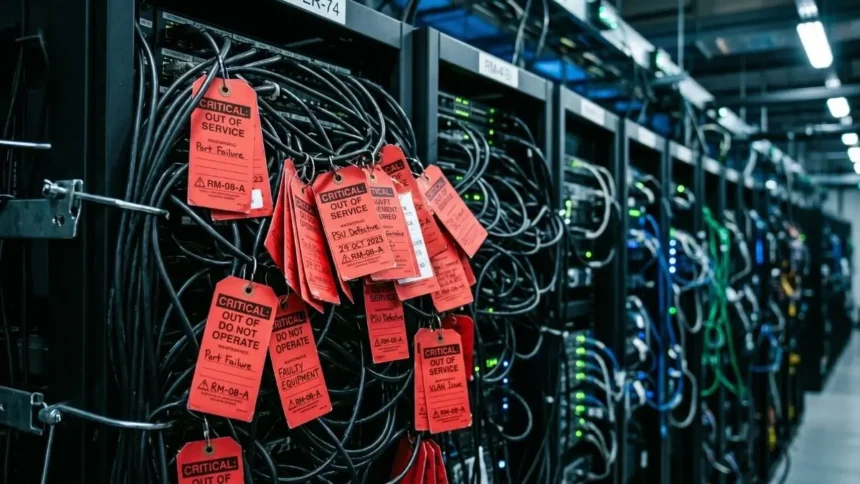
The mainstream coverage frames this development as a triumph of automated defense, but that figure deserves context. The capacity to find software vulnerabilities has now exponentially outpaced the human capacity to actually fix them. Patching critical software requires rigorous testing, deployment cycles, and planned system downtime. This represents a physical and bureaucratic bottleneck that no artificial intelligence model can currently bypass or accelerate.
Furthermore, this dynamic exposes a structural complication in global digital architecture. The exact same computational methods that locate 10,000 flaws for defensive purposes can be easily adapted by state or non-state actors for offensive operations. The technical barrier to entry for discovering zero-day exploits has been severely diminished, fundamentally altering the security calculus for governments and corporations that rely on interconnected networks.
While major tech firms celebrate the identification of these flaws, the sheer volume of newly discovered vulnerabilities places an unsustainable burden on open-source developers. Many of the critical libraries that form the backbone of the modern internet are maintained by small, underfunded teams. Delivering thousands of high-severity bug reports to these developers without providing the automated tools to implement the fixes risks overwhelming the very systems Project Glasswing intends to protect.
A New Security Paradigm
The mechanism is straightforward: automated detection generates a backlog of required manual interventions. As artificial intelligence models become deeply integrated into business platforms—such as Anthropic’s recent initiatives to embed Claude within SAP’s Business AI Platform and KPMG’s digital gateways—the surface area for potential attacks expands simultaneously. The integration of these models into core enterprise operations means that unresolved vulnerabilities carry immediate operational risks for global supply chains and financial systems.
The question is not whether artificial intelligence can successfully audit our digital infrastructure — it is whether human institutions can keep pace with the weaknesses it exposes. Identifying thousands of critical flaws is merely the opening phase of a much longer structural adjustment. The true test lies in managing an environment where software vulnerabilities are discovered exponentially faster than human engineers can ever patch them.